
Buffer vs Hootsuite 2026: Pricing, Features & Who Wins for Whom
Buffer and Hootsuite compared head-to-head in 2026: real prices, post limits, AI features, and which one fits solo creators, teams, or agencies.
Prefer posterly in Google Search?

Buffer vs Hootsuite: Complete Platform Comparison
Buffer and Hootsuite are two of the most popular social media management tools, but they cater to different needs. Buffer focuses on simplicity and is ideal for individuals, freelancers, and small teams who need easy scheduling and basic analytics. On the other hand, Hootsuite is built for larger teams and organizations that require advanced features like detailed analytics, social listening, and robust collaboration tools.
Key Takeaways:
- Buffer: Best for small setups, offering straightforward scheduling, a clean interface, and affordable pricing (starting at AED 18 per channel per month). It supports major platforms like Facebook, Instagram, and LinkedIn but lacks advanced analytics and reporting.
- Hootsuite: Designed for medium to large teams, it provides detailed analytics, multi-step approval workflows, and integrations with tools like Salesforce. Pricing starts at AED 363 per user per month, and it supports additional platforms like YouTube.
Quick Comparison:
| Feature | Buffer | Hootsuite |
|---|---|---|
| Ease of Use | Simple, beginner-friendly | Complex, requires training |
| Scheduling | Drag-and-drop calendar | Bulk scheduling (up to 350 posts) |
| Analytics | Basic metrics | Advanced, customizable reports |
| Collaboration | Limited approval tools | Robust workflows for teams |
| Pricing | Starts at AED 18/month | Starts at AED 363/month |
| Best For | Small teams, freelancers | Medium to large organizations |
If you’re looking for ease and affordability, Buffer is a solid choice. For businesses needing advanced features and detailed insights, Hootsuite is worth the higher cost.
Hootsuite vs Buffer Comparison - Which is Better Choice?
::: @iframe https://www.youtube.com/embed/apZ7y4w1aFQ :::
What is Buffer?
Buffer is a social media management tool designed with simplicity in mind. Since its launch in 2010, it has gained a reputation for being user-friendly, making it especially appealing to content creators, small businesses, and solopreneurs looking to streamline their social media efforts.
The platform is all about making social media scheduling straightforward. Instead of overwhelming users with unnecessary features, Buffer focuses on providing an intuitive experience. It allows users to plan, create, and publish content across multiple social platforms from a single, easy-to-use dashboard. This simplicity has made it a favourite among individuals and small teams who want to maintain a consistent social media presence without the hassle of daily manual posting.
Buffer supports major platforms like Facebook, Instagram, Twitter (X), LinkedIn, Pinterest, and TikTok. It’s built on the idea that managing social media shouldn’t be complicated. With minimal setup, users can start scheduling posts in just minutes.
Now, let’s dive into Buffer’s core features that make social media management easier.
Main Features
Buffer is packed with essential tools for managing social media. Its multi-platform scheduling feature allows users to create a single post and customise it for different networks. Whether you want to tailor content for each platform or post the same message across all, Buffer makes it simple. You can set specific posting schedules for each network and use the queue feature to automatically publish content at your chosen times. This means you can batch-create posts and let Buffer handle the rest.
The visual content calendar gives you a clear overview of your scheduled posts, helping you spot gaps or make adjustments effortlessly.
Buffer also offers basic analytics, covering key metrics like likes, comments, shares, reach, and click-through rates. These insights help you understand how your content is performing without diving into overly complex data.
For users constantly on the go, Buffer’s browser extension and mobile apps are a game-changer. Found an article or image you want to share? With one click, you can add it to your Buffer queue, customise the message, and schedule it for later.
These features make Buffer a practical choice for specific types of users.
Who Should Use Buffer
Buffer is ideal for individual creators and freelancers managing their own social media accounts or handling a few clients. If you’re a consultant, photographer, writer, or small business owner who wants to maintain an active online presence without hiring a dedicated social media manager, Buffer strikes the perfect balance between simplicity and functionality.
Small marketing teams of two to five members will also find Buffer’s collaborative tools helpful. Team members can draft posts, provide feedback, and maintain a unified brand voice across platforms. The approval workflows ensure that every post is reviewed before it goes live, keeping the quality consistent.
Startups and small businesses on tight budgets appreciate Buffer’s clear pricing and no-frills approach. You’re not paying for features you don’t need, and the platform’s minimal learning curve means your team can start using it effectively right away.
That said, large enterprises with complex needs or those requiring advanced analytics may find Buffer’s offerings too limited and might prefer more comprehensive tools.
What Makes Buffer Different
Buffer stands out for its focus on simplicity. While many competitors have added layers of features over the years, Buffer has stayed true to its roots, excelling in the basics of social media management. Its clean and uncluttered interface makes managing your social media accounts less daunting.
One of Buffer’s standout qualities is its transparent pricing. In an industry often criticised for confusing tier systems and hidden fees, Buffer keeps it straightforward. You know exactly what you’re paying for, with no surprise charges for exceeding limits. This clarity reflects the company’s broader commitment to honesty and openness.
Buffer is also recognised for its ethical practices. The company is refreshingly transparent, sharing salary details, revenue figures, and major business decisions publicly. This level of openness resonates with users who appreciate businesses that prioritise responsibility and integrity.
With a mobile-first design and responsive customer support, Buffer is built for users on the move. Whether you’re managing your workflow from a computer or a phone, the experience is seamless. Even users on lower-tier plans often receive timely and personalised support, showing Buffer’s commitment to its user community.
What is Hootsuite?
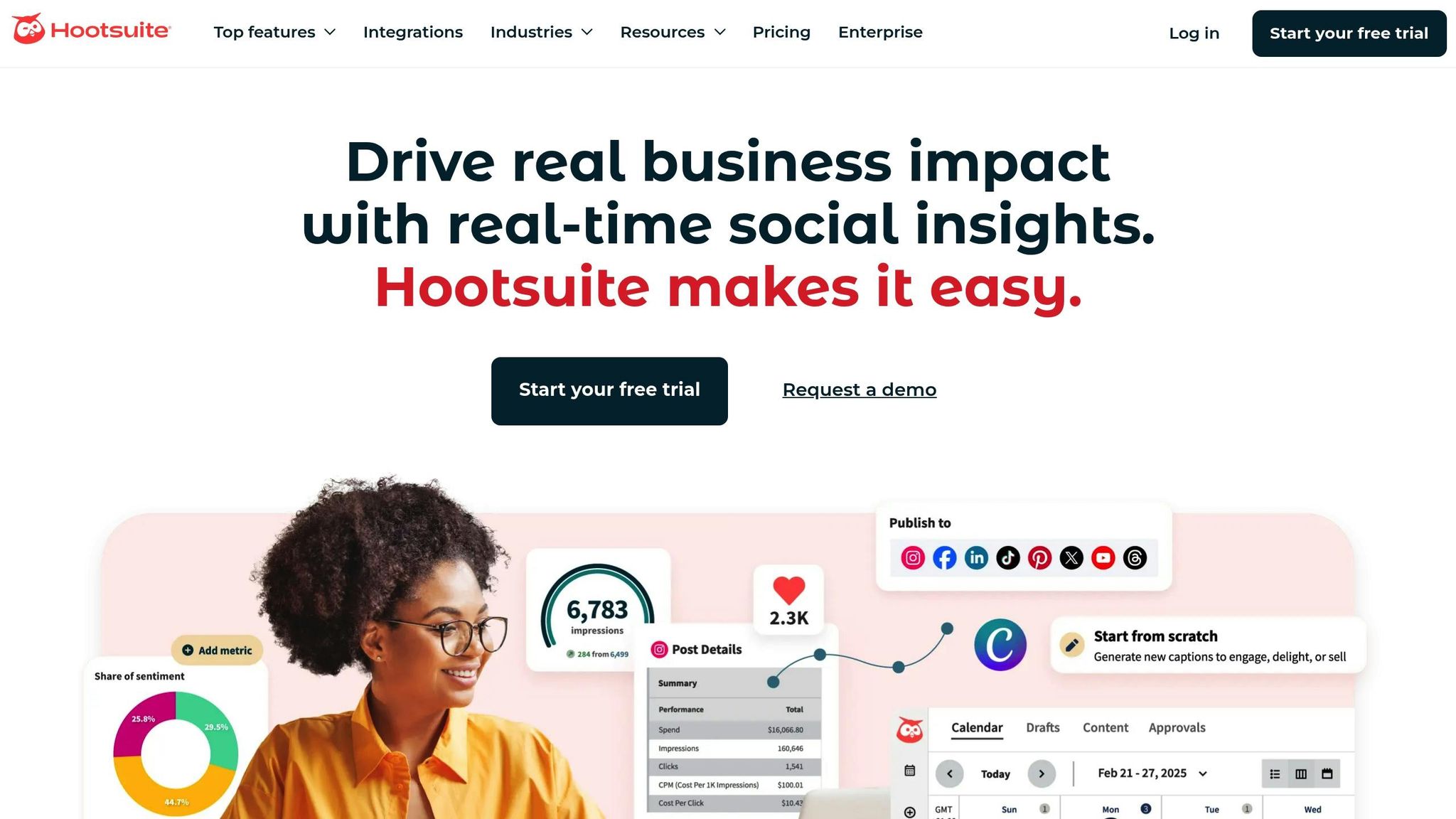
Hootsuite is a robust platform designed for organisations that need advanced social media management tools. It supports intricate workflows, including multi-step approval processes, detailed analytics, and integrations that simplify your marketing operations. With compatibility across all major social networks, Hootsuite is ideal for businesses managing diverse social media channels.
The platform’s dashboard is customisable, allowing users to create streams to monitor feeds, mentions, keywords, and hashtags all in one place. This setup is particularly valuable for teams tracking brand mentions, engaging with customers in real-time, and conducting social listening. For larger organisations with dedicated social media teams, these features ensure smooth collaboration and campaign coordination.
Let’s take a closer look at Hootsuite's standout features.
Main Features
Hootsuite offers a wide range of tools tailored to organisations with complex social media needs. Its scheduling functionality and centralised content library make managing multiple accounts efficient and consistent.
The platform’s analytics tools provide insights into performance metrics, audience demographics, engagement trends, and conversions. Teams can create custom reports and evaluate campaign success, enabling data-driven decisions that highlight the impact of their social media efforts.
Collaboration is another strong suit. With role-based permissions and approval workflows, administrators can manage publishing rights and streamline the review process. Team members can also assign tasks and share internal notes on posts without affecting public-facing content.
Hootsuite’s social listening tools are essential for monitoring brand mentions, industry trends, and competitor activities. Custom streams can be set up to track specific keywords, hashtags, or accounts, ensuring timely alerts for important conversations. This feature is particularly useful for customer support and reputation management.
Additionally, Hootsuite integrates seamlessly with tools like design software, file storage platforms, CRMs, and email marketing systems, helping businesses maintain a unified marketing stack. Built-in advertising tools enable users to create, manage, and track social media ad campaigns directly from the dashboard.
These features empower teams to run well-coordinated and effective social media campaigns.
Who Should Use Hootsuite
Hootsuite is best suited for medium to large businesses, digital agencies, and enterprises managing multiple brands. It’s particularly beneficial for organisations that need detailed reporting, advanced security, and real-time customer engagement. However, individual creators or very small businesses may find its extensive features more than they require.
What Makes Hootsuite Different
Hootsuite stands out for its enterprise-level tools, detailed analytics, and strong security features like two-factor authentication, IP allowlisting, and single sign-on. It’s designed to meet the complex social media needs of large organisations, allowing them to manage numerous accounts and support large teams without compromising performance.
Its analytics capabilities are particularly noteworthy, offering tools like sentiment analysis, competitive benchmarking, and custom metric creation. These features help marketers clearly demonstrate the return on investment (ROI) from their social media efforts.
Another unique aspect is Hootsuite Academy, which provides industry-recognised certification programmes and training courses. This educational resource adds significant value for users looking to enhance their social media expertise.
With support for multiple languages and currencies, Hootsuite is an excellent choice for international organisations, including businesses in the UAE.
Schedule smarter with AI
AI captions, 18 platforms, plans from $7/mo
Buffer vs Hootsuite: Features
Buffer is all about keeping things simple and smooth, while Hootsuite leans into offering a wide range of features for more complex needs. These differences reflect each platform's focus - Buffer on ease of use and Hootsuite on control and flexibility.
Scheduling and Publishing
Buffer makes scheduling posts a breeze with its drag-and-drop calendar. You can easily move, duplicate, and space out posts across multiple accounts. The platform lets you set custom schedules for each social media channel, so you don’t have to manually pick times for every post. Plus, its AI-powered scheduling tool analyses your audience's activity to suggest the best posting times, tailoring recommendations to your specific followers rather than relying on generic trends. If you're planning ahead, Buffer supports bulk uploads via CSV files, giving you the ability to map out campaigns weeks in advance.
Hootsuite, on the other hand, offers a more feature-rich scheduling experience. Its stream-based dashboard allows you to monitor multiple feeds while scheduling posts. You can publish content to individual accounts or push the same post to several platforms, with options to customise for each network. The bulk composer can handle up to 350 posts at once via CSV uploads, making it a strong option for large-scale campaigns.
One standout feature of Hootsuite is its approval workflow system. Team members can submit posts for review, and designated approvers can accept or reject them before they go live. This ensures consistency and reduces the risk of errors. Buffer includes basic approval tools, but these are only available on higher-tier plans and lack the depth of Hootsuite's enterprise-level workflows.
Both platforms support major social networks like Facebook, Instagram, Twitter, LinkedIn, and Pinterest. However, Hootsuite goes a step further by adding compatibility with platforms like YouTube and offering advanced options, such as managing Instagram first comments, creating Twitter threads, and targeting specific LinkedIn audiences.
Analytics and Reporting
Buffer’s analytics are designed to be clear and actionable. Its dashboard highlights key metrics like reach, engagement, clicks, and follower growth with easy-to-read visuals. You can track performance for individual posts, compare results across platforms, and identify the types of content that perform best. Buffer also provides insights into audience behaviour, such as the best times and formats for engagement.
The platform offers exportable PDF reports that can be customised with your branding. These reports are simple and work well for presenting high-level summaries to clients or stakeholders who don’t need in-depth data.
Hootsuite takes analytics to another level with over 200 metrics available for tracking. You can create custom reports that combine data from multiple platforms, compare campaign results over specific timeframes, and even track conversions using UTM parameters. For businesses that want to see how they stack up, the competitive benchmarking feature lets you measure performance against industry peers or direct competitors.
Hootsuite also includes sentiment analysis tools, which categorise brand mentions as positive, negative, or neutral - helpful for managing reputation or responding to crises. Team performance reports allow managers to evaluate individual contributions and spot areas for improvement.
For organisations focused on custom data, Hootsuite lets you define specific KPIs and track them consistently. It integrates with Google Analytics, making it easy to measure how social media drives website traffic and conversions, all within a single dashboard. For businesses in the UAE managing regional campaigns, Hootsuite supports multiple languages and currencies, ensuring reports are tailored to local audiences.
User Interface and Ease of Use
Buffer’s interface is clean and straightforward, with a focus on simplicity. Sections for publishing, analytics, and engagement are clearly labelled, making navigation intuitive. New users can typically get the hang of it within minutes. The minimalist design keeps distractions to a minimum, allowing you to focus on creating content rather than figuring out the system.
The onboarding process walks you through connecting accounts, creating posts, and exploring basic features. This gentle learning curve makes Buffer ideal for users without much social media management experience.
Hootsuite’s interface, while more powerful, is also more complex. The stream-based dashboard can feel overwhelming at first, especially if you’re managing multiple feeds. However, once you get used to it, the customisation options are impressive. You can arrange streams, create tabs for specific workflows, and tailor the layout to fit your team’s needs.
The mobile app offers core functionality but doesn’t replicate the full desktop experience, which might be a drawback for mobile-first users. Some advanced features are simply easier to use on a larger screen.
For those willing to invest time, Hootsuite Academy provides training resources and certification programmes to help users master the platform. While the learning curve is steeper, teams can expect to take a few weeks to fully adjust and use all the features effectively.
Both platforms include time-saving tools like keyboard shortcuts, but Buffer’s simplicity means less training is required. Hootsuite’s extensive capabilities are better suited for professionals who manage social media full-time, while Buffer is a good fit for those juggling multiple responsibilities.
sbb-itb-f7b3a33
Buffer vs Hootsuite: Pricing
When deciding between Buffer and Hootsuite, pricing often becomes a key factor, especially for businesses in the UAE working within tight budgets. Buffer leans towards affordability and simplicity, while Hootsuite caters to larger teams with a more extensive feature set.
Free Plans
Buffer's free plan supports up to 3 social channels and lets you schedule 10 posts per channel. However, it lacks advanced features like analytics and engagement tools. This means you won't be able to monitor how your posts perform or interact with your audience directly from the platform [1][2].
Hootsuite’s free plan, on the other hand, includes basic analytics and social stream monitoring, but its scheduling capacity is more restricted. Both platforms limit support to self-service options in their free tiers.
Paid Plans
Buffer's paid plans are built to accommodate everyone from solo creators to agencies managing multiple clients. These plans include unlimited scheduling, detailed analytics, and tools for team collaboration. While some tiers allow unlimited users, non-admin roles come with fixed permissions. Additionally, Buffer offers an optional add-on called Buffer Reply, which enhances customer service capabilities - a handy feature for managing social interactions.
Hootsuite’s paid plans are designed to scale from individual users to large organisations. These plans include unlimited scheduling, advanced analytics, approval workflows, and in-depth reporting tools. However, as you add users, social accounts, or premium features, the costs can rise significantly.
Both platforms offer discounts for annual billing, which can lead to savings over time.
Which Platform Offers Better Value
If your focus is on basic scheduling and keeping costs low, Buffer is a practical choice. However, for medium to large teams requiring advanced tools like detailed analytics, competitive benchmarking, and robust reporting, Hootsuite's broader feature set may justify its higher price. In short, Buffer is ideal for simplicity and affordability, while Hootsuite stands out for its advanced capabilities and scalability. Next, we’ll explore which platform aligns better with different team sizes and content strategies.
Which Platform Should You Choose?
Deciding between Buffer and Hootsuite boils down to what you need most from a social media management tool. Each platform has its strengths, so understanding your goals will guide you to the right choice.
For Individual Creators and Small Teams
Buffer is ideal for solo creators, freelancers, and small businesses. Its clean and simple interface ensures you can dive right into scheduling posts without being bogged down by unnecessary features. It focuses on the basics: scheduling content, managing a few social accounts, and tracking straightforward performance metrics.
The pricing is also tailored to smaller setups. You can start with a free plan that covers up to three social channels, which is perfect if you're just beginning to grow your presence on platforms like Instagram, LinkedIn, or Facebook. If you need more, Buffer’s paid plans are reasonably priced for managing fewer than 10 accounts.
Collaboration tools in Buffer work well for small teams. You can assign roles, review scheduled posts, and maintain a consistent voice across your channels. This simplicity is especially appreciated by small businesses in cities like Dubai and Abu Dhabi, where the focus is often on keeping audiences engaged without overcomplicating workflows.
For Medium to Large Teams
Hootsuite is the better option when your social media needs become more complex. Larger teams managing multiple brands or departments will find its advanced features worth the investment.
Hootsuite simplifies content approval processes with robust workflows and integrations. This is a huge time-saver for teams that would otherwise rely on endless email threads or chat apps to get approvals.
Its analytics features are also more advanced than Buffer’s. With competitive benchmarking, you can measure your performance against industry standards or even specific competitors. For businesses in competitive sectors like hospitality, retail, or real estate in the UAE, these insights can be crucial for fine-tuning strategies and spotting opportunities.
Another advantage is Hootsuite’s extensive integration capabilities. If your team uses tools like Salesforce or Microsoft Teams, Hootsuite makes it easier to connect these systems to your social media efforts. This seamless integration can streamline workflows across departments.
Larger teams will also appreciate Hootsuite’s detailed reporting tools. You can create in-depth reports for stakeholders, track campaign performance across multiple channels, and measure ROI with precision. This is especially useful when justifying your social media budget or presenting results to senior management.
For AI-Powered Content Creation
Both platforms now incorporate AI tools to enhance your content strategy, though their approaches differ. Buffer’s AI tools focus on content suggestions and captions, offering hashtag recommendations, optimal posting times, and messaging tweaks. These features are great for keeping your content pipeline moving without spending hours on each post.
Hootsuite’s AI tools, on the other hand, focus on optimisation and strategic insights. It uses machine learning to suggest posting schedules, identify trending topics, and recommend content themes based on performance data. For teams juggling multiple campaigns, these insights help prioritise tasks and allocate resources effectively.
However, neither platform’s AI is a complete solution. If creating AI-driven content is a priority, you’ll likely need additional tools specifically designed for writing or content creation.
For UAE businesses creating content in both English and Arabic, it’s worth noting that AI features tend to perform better with English. Arabic content may require more manual input, especially for maintaining tone and cultural nuances.
In practical terms, Buffer’s AI is better for quick fixes, like overcoming writer’s block or maintaining a steady posting schedule. Hootsuite’s AI excels when you need to dive into performance data and adjust your strategy. Your choice depends on whether you need more help with creating content or refining your overall approach.
Final Thoughts
Buffer simplifies scheduling and keeps costs low, while Hootsuite offers more advanced features and in-depth analytics. Deciding between the two depends on what your business needs most.
Buffer stands out for its simplicity and budget-friendly pricing. For businesses in the UAE, its clean design and straightforward costs make it an easy choice for getting started. Paid plans for individuals begin at just AED 18 per channel per month (billed annually). Teams looking for better collaboration tools can upgrade to the Team plan, which supports unlimited users. However, Buffer's analytics are fairly basic, covering metrics like engagement, reach, clicks, and audience growth. It lacks the detailed competitor comparisons and advanced reporting that larger organisations might need for deeper insights.
Hootsuite, on the other hand, caters to complexity and scale. If you're juggling multiple brands, managing numerous social accounts, or need detailed analytics to justify budgets, Hootsuite delivers. Its advanced social listening tools, enhanced by its acquisition of Talkwalker in 2024, and its competitor benchmarking features make it especially useful for businesses in competitive industries. Pricing starts at AED 363 per user per month (billed annually), with no free option available. While its features are powerful, the interface can feel overwhelming for first-time users, and it takes time to master.
Each platform suits different team sizes and needs. If you prioritise speed and ease of use, Buffer lets you connect accounts and start publishing in just minutes. For businesses requiring detailed workflows, granular permissions, and approval processes, Hootsuite’s enterprise-level tools justify the higher cost.
For UAE businesses managing bilingual content, both platforms handle scheduling effectively. However, manually reviewing AI-generated Arabic content is recommended to ensure tone and cultural accuracy. Buffer’s unlimited AI credits provide added flexibility for content creation.
Ultimately, the choice depends on aligning the tool with your current social media management needs. Both platforms offer trials - Buffer’s 14-day free trial and Hootsuite’s 30-day trial - so you can explore which works best for you. Smaller teams and creators often prefer Buffer’s straightforward approach, while larger organisations with more complex requirements lean toward Hootsuite’s extensive features.
FAQs
::: faq
How do Buffer and Hootsuite differ in their analytics features?
Hootsuite provides detailed analytics tools, offering performance reports, customisable dashboards, and social listening features. These tools allow businesses to track trends and understand audience sentiment, making it a great choice for those aiming to dive deep into their social media strategies.
Buffer, in contrast, focuses on basic analytics, covering key metrics such as engagement, reach, and post performance. While it doesn’t offer advanced reporting, it’s perfect for users who prefer a simple, no-fuss approach to monitoring their content's effectiveness. :::
::: faq
How do Buffer and Hootsuite address the unique needs of businesses in the UAE, including language and cultural preferences?
Both Buffer and Hootsuite come equipped with features that cater to businesses in the UAE, but their ability to address specific linguistic and regional nuances can differ. For instance, both platforms support content scheduling in Arabic, a crucial feature for connecting with local audiences in a meaningful way. They also integrate seamlessly with widely used social media platforms in the region, including Instagram and Facebook.
When it comes to cultural considerations, businesses in the UAE should assess how well each platform aligns with their unique needs. For example, managing campaigns around significant events like Ramadan or UAE National Day requires tools that offer flexibility and adaptability. While both platforms deliver a range of functionalities, it's worth exploring their customisation options to ensure they align with the preferences and expectations of your UAE-based audience. :::
::: faq
Which social media management platform is better for a small business starting out: Buffer or Hootsuite?
For small businesses starting out with social media management, Buffer tends to be a popular pick. Its user-friendly layout and simple design make it accessible, even for beginners. Plus, its pricing is budget-friendly, which is a big win for businesses operating with limited resources.
Although both platforms bring useful features to the table, Buffer’s straightforward approach and focus on core tools make it a great match for startups or small teams aiming to manage their social media without getting bogged down by extra complications. :::
Schedule smarter with AI
AI captions, 18 platforms, plans from $7/mo
Founder newsletter
Launch with Alex
Building companies from Dubai. Field notes from running more than one, and the decisions that paid off.
See more of posterly in Google
Add us as a preferred source. Google can show more of our articles in your Top Stories and a Preferred badge in AI Overviews.
Related Articles
10 Time-Saving Tips for Social Media Content Creators
Batched workflows, AI shortcuts, and templates creators use to ship more content with less effort. Practical wins, not productivity theatre.
Read moreAI vs Manual Content Writing: 2026 Cost, Speed & Quality Test
Real 2026 benchmarks: AI vs hand-written content compared on price per post, time per post, and engagement. When AI wins, when humans still win.
Read moreAI Infographic Tools for SaaS Marketing
AI Infographic Tools for SaaS Marketing
Read moreHow to Create 30 Days of Social Media Content Using AI Images in posterly
Generate a full month of original social media images with posterly's AI image tool, write captions for each, and schedule it all in one session.
Read more