
Social Media Management Checklist for Teams
Social Media Management Checklist for Teams
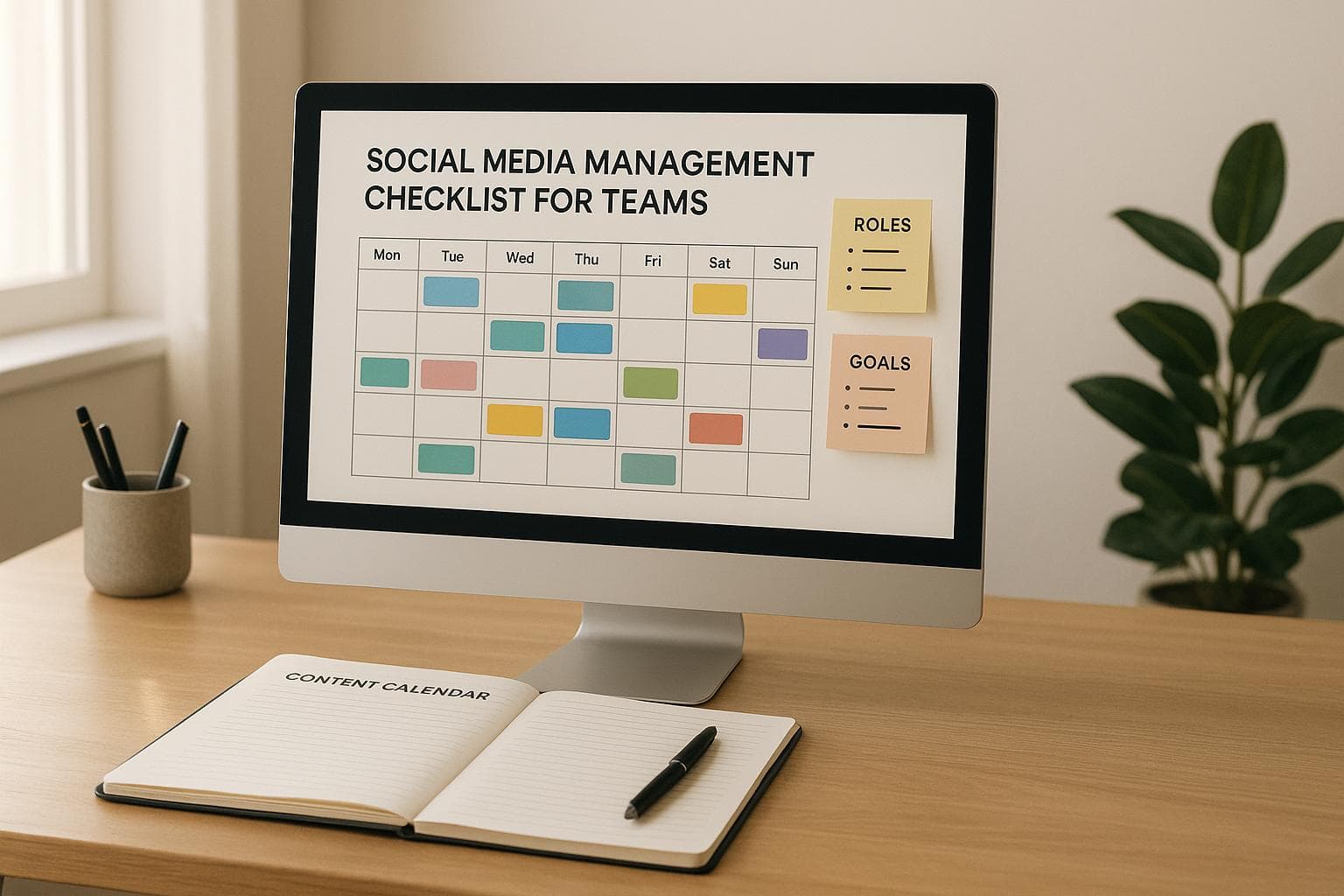
Social Media Management Checklist for Teams
Managing a team’s social media can easily become overwhelming without clear systems in place. To stay organised and efficient, focus on these key areas:
- Set Clear Goals: Define SMART objectives that align with business priorities, such as increasing Instagram engagement by 40% in three months.
- Target the Right Platforms: Prioritise platforms where your audience is active. For UAE audiences, consider local preferences, such as Arabic content and culturally relevant posting times.
- Document Guidelines: Create a shared brand voice and style guide to ensure consistency across all posts.
- Assign Roles: Clarify responsibilities for tasks like content creation, community management, analytics, and approvals.
- Use a Content Calendar: Plan posts ahead, including UAE-specific events like Ramadan or National Day, and leave room for reactive content.
- Streamline Workflows: Establish processes for brainstorming, approvals, and publishing to avoid delays or missed tasks.
- Monitor Compliance: Ensure all content respects UAE laws and cultural norms, especially during sensitive periods.
- Leverage Analytics: Track KPIs like engagement rates and conversions to measure success and refine strategies.
Creating your Social Media Team | Ep 283
::: @iframe https://www.youtube.com/embed/kaedHIAtIfo :::
Strategy and Goal Setting
Before diving into content scheduling, it’s crucial to have a clear strategy in place. Without defined goals and a documented plan, your social media efforts can quickly become reactive and unfocused.
Define Team Objectives and SMART Goals
Your social media goals should directly support your broader business objectives. For instance, if your business is expanding in the UAE market, your social media strategy must align with that focus. If customer retention is your priority, your content and engagement tactics should reflect that.
Using the SMART framework helps your team stay focused and effective:
- Specific: Eliminate vague goals. Instead of saying "increase engagement", aim for something like "boost Instagram comment responses by 40% within three months."
- Measurable: Ensure you can track progress - whether that’s follower growth, website clicks, or lead generation.
- Achievable: Be realistic about your team’s resources. For example, expecting a two-person team to produce 50 posts weekly isn’t practical.
- Relevant: Tie goals directly to your business outcomes, ensuring they contribute to your overall strategy.
- Time-bound: Set deadlines to create urgency and accountability.
When planning for the UAE market, incorporate local events like Ramadan or the Dubai Shopping Festival into your objectives. Document these goals in a shared space to keep your team aligned, and revisit them quarterly to adapt to changing market conditions.
Identify Target Platforms and Audience
Not every social media platform deserves your attention. Spreading your resources too thin across six platforms when your audience is active on only three wastes time and effort. Instead, focus on the platforms where your target audience spends most of their time.
Tailor your approach to each platform:
- Use Instagram for visual storytelling.
- Share professional insights on LinkedIn.
- Provide real-time updates on Twitter.
To succeed, you’ll need detailed audience profiles for each platform. Go beyond basic demographics - understand when your audience in the UAE is most active and what kind of content resonates with them. For instance, posting at 3:00 AM Dubai time because it works for a US audience won’t yield results locally. Also, consider language preferences. While English is widely understood, Arabic content often makes a stronger connection with UAE audiences. Some brands manage bilingual accounts successfully, while others opt for separate channels for each language.
Document platform-specific audience behaviors. Include details like optimal posting times, preferred content formats, and engagement patterns unique to each platform. Start with three or four platforms, mastering those before expanding. A focused, consistent presence on fewer platforms will always outperform a scattered approach across many. Once your team has established solid workflows and can maintain quality, you can consider adding more platforms.
Document Brand Voice and Content Guidelines
Your brand voice is the personality of your organisation in all communications. Without clear documentation, team members may interpret it differently - one might write formally, another might use emojis, and a third might lean on casual slang. This inconsistency can confuse your audience and weaken your brand’s identity.
Create a brand voice guide that defines your tone, language, and communication style. Decide if your tone is authoritative or approachable, professional or playful. Specify whether you use industry jargon or prefer simpler explanations. Include examples of phrases you use and avoid. For instance, if you always say "UAE" and never "U.A.E.", document that.
Visual consistency is just as important. Outline your colour codes, font choices, logo usage, and image styles. When multiple team members create graphics for the same campaign, they should look cohesive, not disjointed. Include examples of approved posts and explain why they work, along with examples of what to avoid and the reasons behind those choices.
For UAE-based teams, include guidelines for local customs and sensitivities. Detail how to acknowledge holidays like Ramadan, how to use culturally appropriate imagery, and whether to translate content or create original Arabic posts. Address how to handle current events and sensitive topics thoughtfully.
Each platform may require slight adaptations in tone and style. For instance, Instagram captions might be casual and emoji-friendly, while LinkedIn posts should maintain a professional tone. Both should still feel like they come from the same brand. Document specifics like character limits, hashtag strategies, and tagging protocols for each platform.
Store these guidelines in a shared location where your team can easily access and reference them. Update them as your brand evolves, but avoid frequent changes that create confusion. When updates are necessary, communicate them clearly and explain the reasons behind the changes.
Assign a team member to act as the "brand voice guardian." This person reviews content to ensure it aligns with the guidelines and provides feedback when necessary. Their role isn’t to slow things down but to maintain quality and consistency as your team grows.
Team Workflow and Communication Setup
Having a structured workflow is key to turning your social media strategies into consistent, measurable outcomes. A well-organised team workflow eliminates confusion, avoids bottlenecks, and ensures that everyone knows exactly what they need to do and when.
Assign Clear Roles and Responsibilities
Clearly defining roles within your team helps avoid overlapping tasks and inefficiency.
Start by identifying specific roles based on your team’s size and objectives. For instance:
- A content creator handles posts, graphics, and video production.
- A community manager manages comments, messages, and mentions.
- An analytics specialist tracks performance metrics and creates reports.
- A strategist ensures all efforts align with business goals.
- An approver reviews content for brand alignment and compliance before publishing.
Outline each role’s specific tasks in a shared document. For example, if a content creator is responsible for captions, visuals, and sourcing images, make that clear. For community managers, set expectations for response times - like replying within two hours during working hours or within a 24-hour window for less urgent matters. Also, define what counts as an urgent issue versus routine engagement.
If you’re working with UAE-based teams, consider language requirements. For bilingual content, assign Arabic posts to native speakers or those fluent enough to ensure the message resonates naturally. Some teams split content creation duties between English and Arabic specialists, while others rely on bilingual talent - choose based on your team’s capabilities and workload.
Document team members’ availability and response times, especially if your team spans different time zones. For instance, if a community manager works Sunday to Thursday, 9:00 to 18:00 Dubai time, clarify who takes over during weekends or after-hours.
To ensure clarity, create a responsibility matrix. List recurring tasks - like content creation, scheduling, engagement, reporting, and crisis handling - and assign a primary and backup person for each. This way, tasks don’t fall through the cracks, and productivity stays on track.
Review and update role assignments regularly, especially when team members join or leave. Redistribute tasks promptly and hold periodic check-ins to address workload imbalances or shifting priorities.
Once roles are defined, focus on streamlining your workflow processes.
Establish Workflow Processes
A structured workflow transforms social media management from a chaotic scramble into a predictable, repeatable system. This approach not only saves time but also improves quality, accountability, and onboarding while making campaign management smoother [1].
Document your processes in a Standard Operating Procedure (SOP). This should outline every step - from brainstorming and planning to creation, approval, publishing, monitoring, and analysis - so everyone knows what’s expected at each stage.
Set up a shared document, design tool, and centralised calendar to manage your content creation process. Define how ideas move from brainstorming to execution. For example, does your team hold weekly planning sessions? Are ideas submitted through a shared form? Who decides which ones move forward? Clearly outline the tools used at each stage and establish a standard naming convention for final assets.
A centralised content calendar is essential for planning, tracking, and managing posts. Use it to organise topics, publishing dates, and approval timelines. This ensures quality control, compliance, and a consistent posting schedule [1]. The calendar should show what’s scheduled for each platform, who created the content, its status (draft, pending approval, published), and any related campaign tags.
Set up multi-level approval processes with clear timelines. For routine posts, a single approval may suffice, but for campaigns or sensitive topics, multiple stakeholders - like marketing leads or legal teams - might need to review. Define approval timeframes (e.g., 24 hours) and offer expedited options when necessary. For UAE-specific content, allow extra time for reviewing posts tied to local events or government initiatives.
Create a content handover checklist. For example, when a content creator finishes a post, they should provide the final copy, approved visuals, platform specifications, posting time, hashtags, and tagging requirements. This ensures posts go live with all elements intact.
While automation tools can help streamline processes, human oversight remains crucial. Strategy, creativity, and cultural sensitivity are areas where human input makes all the difference.
Since workflows should evolve with your business and platform updates, review your processes quarterly. Identify bottlenecks, explore new tools, and gather team feedback to refine workflows.
Use tagging strategies in your content calendar to classify posts by campaign, theme (e.g., educational, promotional), product category, or target audience. This makes it easier to analyse performance and replicate successful strategies [1].
With workflows in place, the next step is to establish clear communication channels.
Set Communication and Escalation Protocols
Effective communication ensures that your team stays aligned and urgent issues are addressed promptly.
Assign specific channels for different purposes. For example, use a messaging app for quick updates, email for weekly reports, and project management software for campaign planning. Consistency in tool usage is key.
Set response time expectations for each channel. For instance, a query in the daily coordination channel might require a response within an hour, while email replies can be addressed within 24 hours. Document these expectations so everyone knows which channel to use based on urgency.
Establish escalation protocols for various scenarios. A negative comment requiring a standard reply might not need escalation, but a serious customer complaint should involve the community manager and possibly senior leadership. Similarly, a compliance issue - like a post violating regulations - should trigger immediate action, including content removal and incident reporting.
Define what qualifies as a crisis and who is responsible. In the UAE, this might include posts that unintentionally offend cultural values, conflict with regulations, or touch on sensitive topics. Your escalation protocol should specify who to contact first, who has authority to remove content, and who communicates with external stakeholders.
Document a crisis response plan. For instance, when a potential crisis arises, team members should know whom to notify, whether to pause scheduled posts, how to draft holding statements, and when to activate the full crisis communication plan. Include contact details for all key stakeholders, including after-hours emergency contacts.
Set up notification systems to ensure the right people are informed at the right time. For example, the community manager should receive alerts for all comments and messages, the approver should know when content is awaiting review, and leadership should be notified of potential crises. Tailor notifications to avoid overwhelming team members with irrelevant updates.
Regular team meetings help maintain alignment. Daily stand-ups can address immediate priorities, weekly reviews can evaluate performance and discuss upcoming campaigns, and monthly strategy sessions can align efforts with broader business goals.
Create feedback loops to improve communication and workflows. After major campaigns, debrief to identify successes and areas for improvement. Use these insights to refine processes and avoid recurring issues.
For distributed or flexible teams, document key decisions and action points in writing. Summarise discussions for team members who couldn’t attend and maintain a shared knowledge base. This repository should include brand guidelines, approval workflows, crisis protocols, platform-specific tips, and templates for recurring tasks.
Creating and Managing a Content Calendar
Once you've nailed down roles and workflows, a well-thought-out content calendar ties everything together. It ensures your team stays on track with consistent posting, timely approvals, and clear strategic goals.
Design a Content Calendar Framework
The starting point for your content calendar is picking a structure that works for your team. Your calendar should cover all the basics for each post: platform, publishing date and time, content type, caption, visuals, hashtags, campaign tags, who’s responsible, approval status, and any special notes.
Plan ahead for key themes, such as UAE-specific events like National Day (2 December), Ramadan, Eid Al Fitr, and Eid Al Adha. By locking these into your calendar early, you give yourself ample time for brainstorming and approvals.
Organise your calendar by platform and adapt your content to fit each one. For example, Instagram might need eye-catching visuals, while LinkedIn posts could focus on professional insights. Document these specifics in your calendar to guide your creators.
Set up content pillars to shape your overall strategy. These pillars define what types of content you'll post and how often. For instance, a tech company might split its posts into categories like product education (40%), industry insights (30%), customer stories (20%), and company culture (10%). Then, decide on posting frequency - maybe five Instagram posts a week, three LinkedIn updates, and daily Instagram Stories. The key is to pick a schedule you can stick to without burning out. Use your calendar to track how often you post under each pillar to maintain balance.
Leave room for flexibility. Build buffer slots for reactive content, like trending topics or breaking news. In the UAE, this could mean responding to government announcements or cultural moments that resonate with your audience. This flexibility keeps your calendar dynamic.
Colour coding or tagging can make your calendar easier to navigate. Assign colours to campaigns, content types, or approval stages. This way, your team can quickly scan and prioritise tasks.
For bilingual strategies, treat Arabic content with care. Clearly mark whether posts are original Arabic or translations. Direct translations often miss the mark, so reviewing for cultural nuances is a must.
If you’re running a campaign, tag related posts in your calendar. This makes it easier to evaluate performance later and replicate what works.
Finally, give your team enough lead time. Most teams work well with a two-week buffer, but for complex campaigns, aim for four to six weeks. This extra time ensures quality and avoids last-minute chaos.
Once your framework is ready, focus on scheduling and batch creation for smoother execution.
Schedule Posts and Batch Content Creation
Batching content is a game-changer for managing social media. Instead of creating posts one by one, set aside time to produce a batch of posts in one go.
Organise your schedule into blocks for brainstorming, production, and editing. This approach cuts down on distractions and improves productivity.
Aim to create five to ten posts per session. This gives you enough variety without being overwhelming. During these sessions, tackle everything at once - write captions, design visuals, edit videos, and compile hashtags. Having all elements ready at the same time makes scheduling much easier.
Templates can save time without sacrificing quality. Create reusable templates for recurring content types, like product updates or team highlights. They ensure consistency and speed up the design process.
Timing matters. For a UAE audience, LinkedIn posts perform well during commute hours (7:00–9:00 and 17:00–19:00) and lunch breaks (13:00–14:00). Instagram engagement tends to peak in the evening (19:00–22:00). Test different times and adjust based on what works best for your audience.
Keep the UAE workweek in mind, too. With weekends falling on Friday and Saturday, posting patterns can shift. Thursday evenings and Friday mornings often see different activity levels. Some brands reduce Friday posts, while others increase them depending on their audience.
If your audience spans multiple time zones, adjust your schedule accordingly. For example, a post at 9:00 Dubai time reaches London at 5:00 and New York at midnight. You might even create separate posts for different regions.
Stay ahead of your schedule. Always have at least a week’s worth of content ready to go. This buffer protects you from unexpected delays, like team illness or last-minute changes.
Beyond content creation, batch similar tasks to boost efficiency. Set aside time for replying to comments, analysing data, or researching trends. Grouping similar tasks helps you stay focused.
Seasonal content, like Ramadan campaigns, needs extra planning. Start at least six weeks in advance to allow for thoughtful messaging and approvals. Rushed seasonal posts often feel generic and fail to connect with your audience.
Use your calendar to spot gaps. If you see a few days without Instagram posts or a week without educational content, address it during your next batching session. Regular reviews keep your strategy balanced.
Once your posts are scheduled, it’s time to focus on quality control.
Review and Approve Content Before Publishing
Every post should go through a review process to avoid mistakes and protect your brand. The level of review depends on the content’s sensitivity and reach.
For routine posts, like product photos with simple captions, one approval might suffice. But for campaigns, promotions, or posts on cultural topics, multiple reviewers may be needed - this could include marketing leads or even legal advisors.
Create a checklist to ensure quality. Check captions, visuals, hashtags, and links against brand guidelines. This systematic review catches errors before they go live.
For UAE-specific content, cultural sensitivity is crucial. Make sure posts respect local customs and values. What works in other markets might not translate well here, so a cultural review is essential.
Set clear timelines for approvals. Routine posts might need 24 hours, while sensitive content could require 48–72 hours. Communicate deadlines so creators know when to submit their work.
Have backup approvers in place. If the main reviewer is unavailable, someone else should step in to keep things moving. Make sure backups are familiar with brand standards.
Use version control to track changes during the review process. If edits are requested, document what changed and why. This helps resolve disputes and serves as a learning tool for creators.
Build feedback loops to improve over time. If certain issues keep coming up - like “tone too casual” or “image quality too low” - address them through training or updated guidelines.
For Arabic content, native speakers should handle reviews. Automated tools often miss nuances or cultural references, so human review is vital for credibility.
Set up reminders to prevent bottlenecks. If content sits in review for too long, automated prompts can nudge approvers to take action.
For time-sensitive posts, like breaking news, have an expedited review process. Define what qualifies for fast-tracking and who has the authority to approve it.
Finally, document approval decisions, especially for rejected posts. Understanding why a post didn’t make the cut helps creators improve and sets clear expectations moving forward.
Compliance and Cultural Considerations
Managing social media in the UAE requires careful attention to local laws and cultural norms to safeguard your brand's reputation. Incorporating these compliance measures into your workflows can help ensure smooth operations and align your overall social media strategy with local expectations.
Stay Aligned with UAE Laws
Understanding and adhering to UAE-specific online regulations is critical. These laws cover areas like misinformation, cyber activities, data protection, and advertising transparency. While the exact requirements differ across industries, here are some essential steps:
- Create clear internal guidelines that reflect UAE standards.
- Train your team to identify content that could violate national security, public morals, or consumer protection laws.
- Ensure all sponsored posts and promotional materials are honest and clearly marked.
- Respect intellectual property by using only properly licensed materials.
Industries like finance and healthcare often face stricter regulations, so seeking legal advice before publishing sensitive content is a wise move.
Respect Cultural Sensitivities
Crafting content that resonates with UAE audiences means aligning your messaging with the country's cultural and religious values. Keep these points in mind:
- Reflect Islamic values in your messaging. Avoid using imagery or language that could be seen as inappropriate or offensive.
- Adjust your content for important occasions like Ramadan and other national holidays. For instance, during Ramadan, adapt your posting schedule to fit the audience's daily routines.
- Celebrate national events with a focus on community and genuine respect, steering clear of overt commercialism.
- Use visuals and narratives that authentically represent the UAE's diverse population, while being mindful of local customs and sensitivities.
- Follow local conventions for measurements, such as using Celsius for temperature, kilometres for distance, and metric units for weight.
Merging cultural awareness with legal compliance ensures your campaigns resonate with the audience while staying within regulatory boundaries.
Seek Legal Guidance for Campaigns
For campaigns involving contests, user-generated content, influencer collaborations, or industry-specific promotions, legal consultation is essential. Here's how to approach these situations:
- Clearly define terms and conditions for contests or giveaways, including eligibility, entry methods, prize details, and dispute resolution.
- Obtain rights agreements for any user-generated content you plan to use.
- Establish detailed contracts with influencers, covering content approval processes, disclosure requirements, and other key terms to ensure compliance.
- Back up any claims related to health, safety, or finances with credible evidence, and keep documentation for reference.
- Regularly review and update your social media policies with input from legal experts.
sbb-itb-f7b3a33
Tracking Performance with Analytics
Analytics transform guesswork into clear, data-backed decisions. Without proper tracking, your team operates in the dark, unable to pinpoint what’s working and what’s not. By leveraging analytics, you lay the groundwork for ongoing improvement and can clearly show stakeholders the results of your social media efforts.
Define Key Performance Indicators (KPIs)
Your KPIs should align directly with your business objectives. For instance, if your goal is brand awareness, focus on metrics like reach, impressions, and follower growth rate. If engagement is your priority, track likes, comments, shares, and engagement rate (calculated as total engagements divided by total followers or reach). For conversion-driven strategies, keep an eye on click-through rates, conversion rates, and cost per acquisition.
Steer clear of vanity metrics that don’t tie back to business outcomes. A large follower count, for example, means little if those followers aren’t engaging or converting. Instead, metrics like post engagement rate give a clearer picture of how your audience interacts with your content.
Use historical data and industry benchmarks to set realistic KPI targets. Clearly document these benchmarks so your team knows what success looks like. Revisit and refine these goals quarterly to stay aligned with your evolving strategy and audience growth.
For customer service objectives, tracking response time is essential. In the UAE, audiences expect quick replies, especially during business hours (09:00 to 18:00, Sunday to Thursday). Set measurable targets for average response and resolution times, ensuring your team maintains high service standards - even during peak periods.
By focusing on these metrics, your team can ensure every effort contributes to a cohesive and effective social media strategy.
Set Up Real-Time Reporting Dashboards
Once your KPIs are established, real-time dashboards make it easy to track performance. These dashboards centralise data, eliminating the need for manual compilation and providing instant access to key insights.
Design dashboards to display your KPIs in a clear and prioritised manner. Place the most critical metrics - like engagement rate, reach, and new followers - at the top for easy visibility. Include both daily metrics and weekly trends to monitor performance over time.
Organise dashboards by platform, campaign, or content type to identify what’s working best. For example, separate Instagram Stories from feed posts or compare LinkedIn articles to status updates. This segmentation helps you spot trends and optimise your content strategy.
Set up automated alerts for sudden metric changes. For instance, if your engagement rate drops 20% below its seven-day average, your team should be notified immediately to investigate potential issues.
Incorporate comparative data to provide context. Display performance side-by-side with previous periods, such as this week versus last week or this month versus the same month last year. This helps distinguish between meaningful trends and normal fluctuations.
Finally, grant team members access to dashboards based on their roles. Content creators should see which posts perform best, while managers need a broader view of strategic insights. Tailor access to ensure everyone gets the information they need without being overwhelmed.
Analyse and Adjust Strategies
With your data in place, it’s time to dig into the numbers and refine your strategy. Regular analysis ensures you’re not just tracking performance but actively improving it.
Schedule weekly performance reviews to evaluate your content against your KPIs. Identify top-performing posts and analyse what made them stand out. Look beyond raw engagement numbers - consider factors like posting time, format, topic, tone, and visuals. Document these patterns to guide future content creation.
Pay attention to content formats to see which ones resonate most with your audience. For example, video might perform well on one platform, while carousel posts excel on another. Calculate the average engagement rate for each format and allocate resources accordingly.
Regularly review audience demographics to ensure your content reaches the right people. Analyse key data points like age groups, UAE locations (e.g., Dubai, Abu Dhabi, Sharjah), and interests. If you discover unexpected audience segments, decide whether to adjust your strategy or focus more on your priority groups.
Examine conversion funnel drop-off points to identify where users lose interest. If people click through to your website but don’t convert, the issue may lie beyond your social media efforts. On the other hand, if your reach is high but engagement is low, your content may not be connecting with your audience.
Compare campaign performance against your benchmarks and objectives. For paid campaigns, calculate ROI by dividing revenue generated by campaign costs. For organic efforts, assess whether the time invested is yielding proportional results. Be ready to shift resources from underperforming initiatives to those delivering better outcomes.
Summarise your findings in a monthly analytics report. Highlight key insights, successful tactics, and recommended adjustments. Share specific examples of high-performing content and explain why they worked. This makes your analysis both actionable and easy for stakeholders to understand.
When testing new strategies, make changes one variable at a time. For instance, if you’re experimenting with content formats or messaging, adjust only one element so you can clearly identify what’s driving any performance shifts. Run these tests for at least two weeks to account for normal fluctuations before drawing conclusions.
Daily and Weekly Social Media Tasks
Maintaining a steady rhythm of daily and weekly tasks ensures your social media efforts stay on track. This approach helps you avoid missed opportunities, respond quickly to your audience, and manage potential issues before they escalate. Breaking tasks into manageable routines keeps your team focused and aligned with your overall strategy.
Daily Tasks: Engagement and Monitoring
Your daily activities form the backbone of your social media presence. These tasks keep your audience connected to your brand while helping you stay ahead of any potential problems.
-
Respond to comments and messages promptly during UAE business hours (09:00–18:00, Sun–Thu). Assign team members to monitor platforms throughout the day. No comment or message should go unanswered for more than a few hours, with priority given to product inquiries, complaints, or urgent questions. Responding quickly shows your audience you’re attentive and engaged.
-
Track brand mentions, including common misspellings and relevant hashtags. Use saved searches or monitoring tools to stay informed. This allows you to join conversations and address issues as they arise.
-
Check your content calendar every morning. Ensure scheduled posts are still appropriate, especially in light of major news, public holidays, or unexpected events. For example, a lighthearted post may not be suitable during a significant event in Dubai or Abu Dhabi.
-
Engage with user-generated content. Like, comment, and share posts from your followers, always giving proper credit. This strengthens relationships and boosts your visibility.
-
Spend 15–20 minutes daily tracking trends. Look for UAE-specific or global trends that align with your brand. If a trend fits your voice and values, create timely content to join the conversation.
-
Log key interactions. Record positive feedback, recurring questions, and complaints. Include details like the time, platform, and nature of the interaction, as well as your team’s response. This information can guide future content, product improvements, and customer service strategies.
Once your daily tasks are under control, shift focus to weekly reviews for a broader perspective.
Weekly Tasks: Performance Reviews and Trend Analysis
Weekly tasks build on your daily efforts, helping you assess progress and refine your strategy. These activities ensure your work contributes to long-term goals rather than just maintaining daily operations.
-
Analyse weekly performance metrics. Compare engagement, reach, and follower growth to benchmarks and the previous week’s results. Identify your top three posts and pinpoint what made them successful - was it the timing, visuals, or content type? Use these insights to shape future posts.
-
Track audience growth and demographics. Check if new followers match your target audience. For UAE-based teams, pay special attention to geographic data across emirates to ensure you’re reaching key locations.
-
Review competitor activity. Analyse what your competitors are posting, which topics resonate with their audience, and how their followers engage. Use this information to identify opportunities to stand out.
-
Update your content calendar. Incorporate formats and topics that performed well, and adjust underperforming strategies. Be sure to account for upcoming UAE public holidays, events, or industry dates relevant to your audience.
-
Audit your hashtags. Identify which hashtags drove the most engagement and explore new trending ones in your niche. For UAE-focused content, balance location-specific tags like #DubaiLife with broader industry hashtags.
-
Hold a short team meeting. Share insights, discuss challenges, and align on priorities. Keep the session brief - no more than 30 minutes - and focus on actionable takeaways.
-
Refresh saved responses. Update templates based on recurring questions or feedback from the week. For example, if multiple inquiries about a product feature arise, create a pre-written response to streamline communication.
Crisis Management and Reputation Monitoring
Even with careful planning, social media crises can happen. How quickly and effectively you respond can make all the difference between a manageable situation and a reputational crisis.
-
Define clear crisis triggers. Establish thresholds, like receiving more than 10 negative comments in an hour, to determine when to escalate an issue.
-
Create an escalation plan. Assign responsibilities for different crisis levels. Minor complaints might be handled by a community manager, while more serious issues may require input from senior leadership or the legal team.
-
Monitor sentiment shifts. Use alerts to track spikes in mentions, especially those containing words like "disappointed" or "angry." For UAE audiences, also monitor Arabic-language mentions to address local concerns.
-
Respond quickly but thoughtfully. Acknowledge issues within the first hour and follow up with a detailed response. Use holding statements to show you’re aware of the situation and investigating. Avoid deleting negative comments unless they violate community guidelines.
-
Document every crisis. Keep a log of what happened, how you responded, and the outcomes. Include screenshots and note any media coverage or external commentary.
-
Prepare response templates. Draft pre-approved statements for common scenarios like shipping delays or product recalls. These templates should include placeholders for specific details, ensuring your response is both timely and accurate.
-
Conduct post-crisis reviews. Within 48 hours of a major incident, gather your team to evaluate what happened and how to improve. Update your crisis protocols based on these lessons and share insights with other departments.
Using AI-Powered Tools for Efficiency
AI-powered tools can simplify social media management for UAE-based teams juggling multiple platforms and time zones. By integrating these tools into team workflows, the transition from content creation to publishing becomes smoother. However, identifying which tasks to automate and which need human oversight is crucial.
Integrate AI for Content Creation
Creating fresh captions and visuals daily can drain creative energy. Tools like Posterly’s AI Caption Assist are designed to tackle this challenge, offering quick ideas to overcome writer’s block. This allows your team to focus on strategy instead of struggling to fill a blank page.
To get the best results, feed your AI tool with key brand details such as tone, messaging style, and target audience. For example, if your brand specialises in Emirati cuisine, provide specifics about your offerings and audience preferences to generate tailored caption and visual ideas.
For visual content, Posterly’s Nano Banana feature steps in when your design team is stretched thin. It creates custom visuals in minutes, which is especially helpful for time-sensitive posts like flash sales or event reminders during UAE public holidays.
That said, AI-generated content should always be treated as a draft. Assign a team member to review all outputs for accuracy, cultural sensitivity, and brand alignment. This is particularly important in the UAE, where details like Ramadan-appropriate imagery and the balance between formal and casual language play a significant role in audience perception.
Establish clear guidelines for when and how to use AI. Routine updates, product announcements, and evergreen content are ideal for automation, while complex or sensitive topics should always involve human input. This approach ensures a smooth transition from creation to automated scheduling.
Automate Scheduling and Publishing
Once your content is ready, scheduling it at the right times ensures maximum reach. Manually posting on platforms like Instagram, LinkedIn, and TikTok can eat into valuable hours better spent on strategy or audience engagement. Posterly’s scheduling features allow you to plan weeks of content in advance, ensuring posts go live at optimal times, even if your team is offline.
Batch scheduling can free up your team’s time for real-time interaction. Dedicate a specific day to plan and schedule posts, leaving the rest of the week open for monitoring and engaging with your audience.
Posterly’s Hey Posterly feature simplifies this process further. Instead of navigating multiple menus, you can quickly adjust posting times based on performance insights, helping you refine your strategy on the go.
For brands targeting both local and international audiences, align your schedule with key time slots like early mornings, lunch breaks, and evenings. This way, you can reach commuters, midday browsers, and evening scrollers effectively.
Additional tools like duplicate prevention and Google Drive integration make asset management easier. By uploading visuals to a shared folder, your team can access them effortlessly during scheduling, reducing the risk of errors like accidental reposts.
Maintain Human Oversight for AI-Generated Content
While AI can save time, human oversight is essential to ensure content aligns with strategic goals and cultural standards. This is particularly important in a diverse market like the UAE, where cultural nuances and regulatory guidelines must be carefully considered.
Review AI-generated content in two stages. Start with an initial check for accuracy, brand voice, and quality. Then conduct a second review focusing on cultural and regulatory appropriateness. Someone well-versed in UAE norms and regulations should handle this step, especially for sensitive topics.
Train your team to spot common issues like generic phrasing, inaccuracies, or tone mismatches. Keep a record of edits made to AI-generated content, and use these insights to refine your prompts or decide when manual creation is more appropriate - especially for content requiring specific language or cultural references.
Be mindful of your plan limits on tools like Posterly. For example, the Starter plan offers 30 AI Caption Assist uses per month, which works well for smaller teams posting daily. Meanwhile, the Pro plan provides unlimited assistance for higher posting volumes. Monitoring your usage ensures you stay within your plan’s limits during critical campaigns.
Striking the right balance between efficiency and authenticity is key. Use AI to handle repetitive tasks and generate drafts, but always let your team add the personal touches - like local references, timely observations, or brand-specific humour - that make your content truly connect with your audience.
Conclusion
Managing social media as a team in the UAE requires a well-structured and cooperative approach. The checklist we've discussed combines key elements that drive effective teamwork: a clear strategy, well-defined workflows, an understanding of local culture, and decisions guided by data.
Start by setting clear objectives and assigning specific roles to each team member. This helps avoid confusion and duplication, especially during fast-paced campaigns like Ramadan or National Day, where timing and cultural sensitivity are non-negotiable.
Your content calendar acts as the backbone for consistent posting, but it’s only effective when supported by thorough review processes. Make it a priority to check every piece of content for compliance with UAE regulations and cultural norms before it goes live. This is about more than just avoiding fines or penalties - it’s about safeguarding your brand’s reputation and building trust in a market that values authenticity and respect for local traditions.
Don’t overlook the power of analytics. Regularly reviewing your data allows you to make timely adjustments. Monitoring the right KPIs helps you identify trends early, ensuring your efforts are focused where they matter most.
AI tools can take care of repetitive tasks and speed up content creation, but they’re most effective when paired with human judgment. Use AI to handle the heavy lifting, freeing up your team to focus on creativity and strategy. Together, these components create a well-rounded plan for ongoing team success.
Think of this checklist as a flexible guide rather than a strict set of rules. As your team grows and platforms evolve, adapt these practices to meet new challenges. The teams that thrive are the ones that stay organised, communicate effectively, and adjust to changing circumstances with ease.
FAQs
::: faq
How can we create social media content that resonates with the UAE audience?
To craft social media content that truly connects with the UAE audience, it's essential to embrace the local culture and values. Respect for Islamic traditions, family-centric values, and national pride should be at the heart of your messaging. Incorporating both Arabic and English thoughtfully can help you reach a broader audience while maintaining a professional and respectful tone.
Mark significant occasions like National Day and Ramadan with content that highlights the UAE’s rich culture and heritage. Use visuals that resonate with the local audience, such as iconic landmarks or traditional elements. Always be mindful of local guidelines, steering clear of sensitive topics like politics or anything that could be considered offensive.
Another effective approach is collaborating with influencers who not only align with your brand but also have a deep understanding of cultural subtleties. This can help foster genuine connections and enhance your message’s impact. :::
::: faq
How can I create a content calendar that reflects UAE events and holidays effectively?
To build a content calendar that aligns with UAE-specific events and traditions, start by identifying key dates like public holidays, national celebrations, and cultural occasions. Adding these to your schedule ensures your content stays relevant and timely.
Customise your posts to mirror local traditions and preferences. For instance, you could share Eid greetings, create National Day tributes, or promote Ramadan-related offers. Launching campaigns or flash sales the evening before major holidays can also resonate well with local shopping habits.
Keep some flexibility in your calendar to adapt to last-minute changes or trending topics. This approach allows your team to stay responsive and in tune with the dynamic events happening across the UAE. :::
::: faq
How can we use AI tools in our social media management while respecting cultural sensitivity?
To seamlessly incorporate AI tools into your social media strategies while respecting the cultural nuances of the UAE, start by tailoring content specifically for your local audience. AI can help generate regionally relevant copy, but it’s crucial to review and adapt this content to ensure it aligns with the traditions, values, and linguistic subtleties of the area.
Use AI for tasks like scheduling posts, analysing performance metrics, or automating repetitive processes, but always keep human oversight in the loop. This step is vital to ensure that the tone, visuals, and messaging stay respectful and culturally appropriate. For instance, avoid posting during significant local holidays or prayer times unless the message has been thoughtfully customised for the occasion.
By blending the efficiency of AI with a mindful human approach, your team can strike the perfect balance between modern technology and cultural sensitivity. :::
Related Articles
How to Create 30 Days of Social Media Content Using AI Images in posterly
A practical guide to generating a full month of original social media images with posterly's AI image tool, writing captions for each one, and scheduling everything in a single session.
Read moreHow to Find the Best Time to Post on Social Media Using posterly's AI Scheduler
Stop guessing when to post. This guide explains how posterly's AI Scheduler analyses your audience activity and automatically picks the best posting times so your content gets seen by more people.
Read moreHow to Manage Google Business Reviews on Autopilot With posterly
A step-by-step guide to responding to Google reviews with AI, automatically requesting new reviews from customers, auditing your profile for local SEO, and turning your best reviews into social media content.
Read moreHow to Manage Multiple Client Social Media Accounts With posterly Workspaces
A practical guide for agencies and teams on using posterly Workspaces to organise client accounts, assign roles, get content approved, and schedule posts across dozens of social profiles without things getting messy.
Read more