
How to Schedule Posts Across Multiple Platforms
How to Schedule Posts Across Multiple Platforms
How to Schedule Posts Across Multiple Platforms
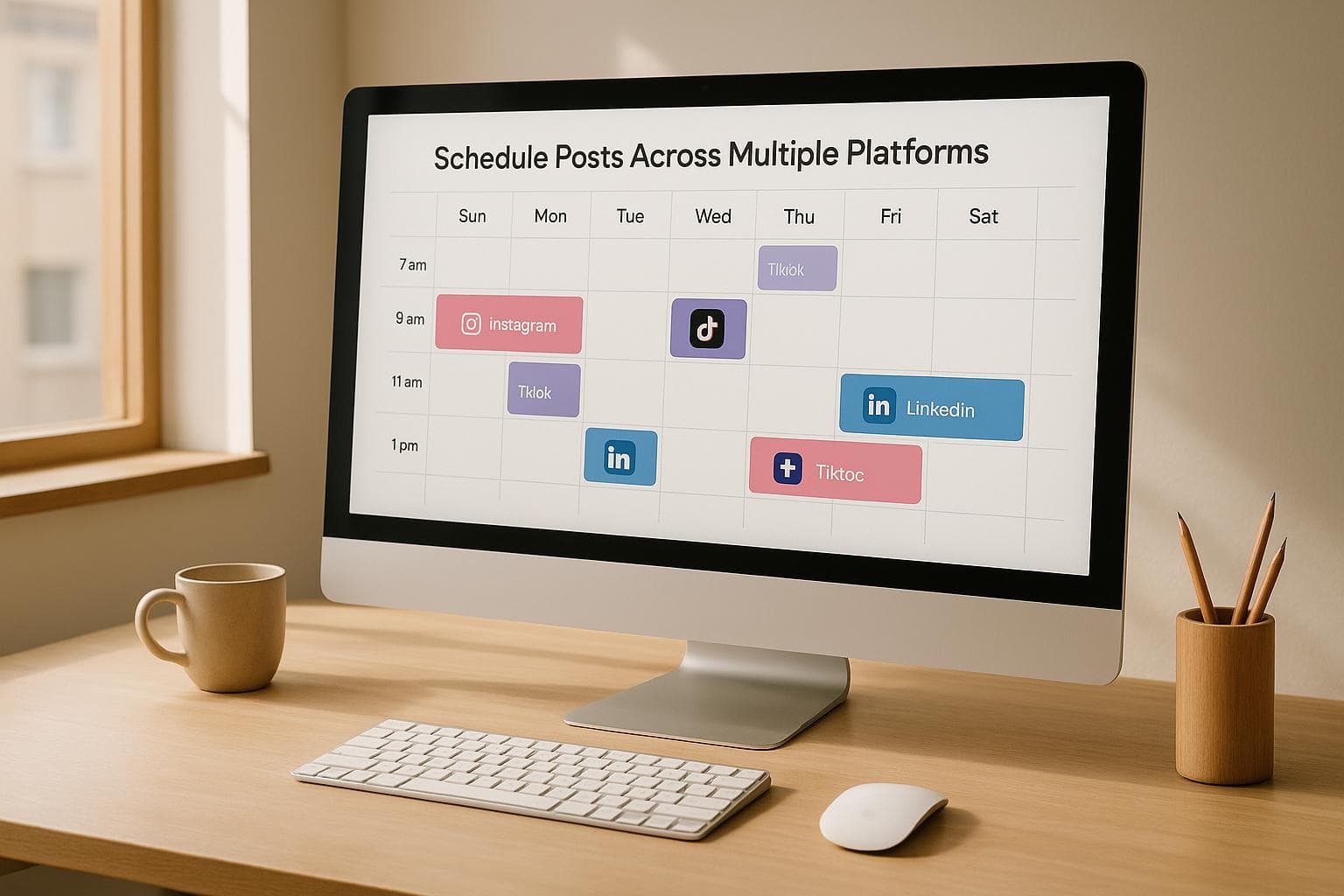
Managing multiple social media accounts can feel overwhelming, especially when balancing different platforms and peak engagement times. Scheduling posts in advance simplifies this process, ensuring consistent posting without constant manual effort. It also helps boost engagement, maintain visibility with platform algorithms, and reach your audience at the right time.
Here’s a quick breakdown of key strategies:
- Choose the right platforms: Focus on where your target audience is most active. For example, LinkedIn for professionals in Dubai, TikTok for younger audiences in Abu Dhabi, and Instagram for visually-driven content.
- Customise content: Tailor your posts to fit each platform’s format, tone, and audience preferences. For instance, use short, casual videos for TikTok and professional, long-form posts for LinkedIn.
- Plan ahead: Use a content calendar to organise posts by platform, date, and type. Include UAE-specific events like Ramadan, Eid, and National Day to stay relevant.
- Batch content creation: Save time by producing multiple posts in one session. For example, shoot several Instagram Reels or draft LinkedIn posts for the week in one go.
- Leverage scheduling tools: Tools like Posterly automate the scheduling process, optimise posting times, and adjust content for different platforms.
Quick Comparison of Platform-Specific Tips
| Platform | Content Focus | Best Times to Post (UAE) |
|---|---|---|
| Visuals, Reels, Stories | Breaks (e.g., 07:00, 13:00, 21:00) | |
| Professional insights, long-form text | Weekday mornings and lunch hours | |
| TikTok | Casual, entertaining short videos | Evenings (after 19:00) |
| X (Twitter) | Real-time updates, concise posts | Morning and evening |
| Community posts, video content | Midday (12:00–14:00) | |
| YouTube | Long-form videos, Shorts | Evenings and weekends |
Scheduling posts saves time, ensures consistency, and improves engagement. With the right tools and planning, you can manage multiple platforms effortlessly while focusing on creating quality content.
How to Automate your Social Media Posts with AI | Save weekly auto scheduling post
::: @iframe https://www.youtube.com/embed/S1Ip6Pa9cGM :::
Selecting the Right Platforms for Your Content
Not every platform suits every creator or brand. The key is to focus on where your audience is most active and where your content style fits best. Trying to be everywhere often dilutes your impact and engagement.
To start, think about your target audience's preferences and habits. For instance, LinkedIn is a natural choice for reaching Dubai's financial professionals, while Instagram and TikTok are better suited for promoting fashion or lifestyle products to younger audiences in Abu Dhabi. Aligning your content type with platform demographics ensures your efforts are well-placed.
Your content creation capacity also plays a big role. Platforms like TikTok and Instagram Reels require substantial video production, while text-heavy platforms like LinkedIn and X (formerly Twitter) demand less visual work. If you're working solo and lack video editing skills, focusing on text-based platforms might save you time and energy.
Platform-Specific Content Requirements
Different platforms have distinct content styles and expectations, which directly affect how well your posts perform.
-
Instagram: This platform thrives on visually engaging content, such as Reels (15 to 90 seconds), carousel posts, and Stories. Vertical videos perform especially well, with Reels often reaching a broader audience than static posts. If your focus is on photography, product showcases, or short-form video, Instagram should be a priority. Its shopping features also make it ideal for e-commerce businesses in the UAE. Timing matters too - posting during local business hours can improve engagement.
-
TikTok: Authentic, entertaining videos are the key to success here. Overly polished content tends to underperform, while casual and relatable videos resonate with users. The algorithm favours videos that capture attention in the first three seconds and maintain high watch times. TikTok is perfect for brands targeting people under 35 and those open to exploring trends.
-
LinkedIn: Professional insights and in-depth industry commentary drive engagement on LinkedIn. Long-form text posts (1,300 to 2,000 characters) often perform better than shorter updates, and carousel PDFs or native documents can boost visibility. If you're building a reputation as an industry expert or targeting B2B audiences, LinkedIn should be a core focus.
-
X (formerly Twitter): This platform is all about timely updates, concise posts, and conversations. Its fast-paced nature means content has a shorter lifespan - typically just a few hours. X works well for news, real-time updates, and direct audience interaction through threads and replies.
-
Facebook: While its organic reach has declined, Facebook still holds value for community building and longer-form content, especially for audiences over 35. Groups and events perform well, making it a good choice for local businesses in the UAE. Video content also gets priority in the feed.
-
YouTube: This platform demands the most time and effort, with long-form videos (8 to 15 minutes or more) performing best for channel growth. For creators with limited resources, YouTube Shorts (under 60 seconds) offer an easier entry point. Thanks to its search functionality, YouTube content has a longer shelf life, making it ideal for educational or evergreen topics.
UAE Audience Considerations
When targeting UAE audiences, it's crucial to adapt to local habits and engagement patterns, which can vary throughout the year based on cultural events, work schedules, and seasonal changes.
Ramadan is a prime example. During this month, engagement typically drops during daylight hours and peaks after iftar (19:30–23:00). Brands that align their posting schedules with these shifts see better results. Additionally, the tone of content matters - community-focused and charitable messaging resonates more than overtly promotional content during this time.
The UAE's bilingual nature offers both opportunities and challenges. While English dominates in business settings, Arabic content often connects more deeply with local audiences. Many successful accounts alternate between the two languages or use bilingual captions to maximise their reach. For instance, LinkedIn tends to see more English engagement, while platforms like X and Facebook often perform better with Arabic content, especially for local topics.
The UAE weekend - Friday and Saturday - also impacts posting strategies. Fridays generally see lower professional engagement but higher leisure browsing, making it a good day for lifestyle and entertainment content. For business-related posts, Sunday through Thursday yields better results.
Seasonal factors play a role too. During the summer months (June to September), when temperatures soar past 40°C, people spend more time indoors, leading to increased screen time, especially during midday. In contrast, the cooler winter months (November to March) bring more outdoor activity, slightly shifting engagement patterns. Evening remains a prime time for posting year-round.
Local events and holidays, such as UAE National Day (2nd December), Eid celebrations, and the Dubai Shopping Festival, also significantly influence engagement. Planning your content calendar around these occasions ensures relevance and boosts visibility.
Building an Efficient Scheduling Workflow
A well-organised workflow keeps last-minute chaos at bay and ensures you hit your deadlines. Without a proper system, you might miss posting times, repeat content, or compromise on quality.
The key is to set up a process that simplifies your tasks. This involves planning ahead, creating content in batches, and establishing clear approval steps, especially when working with a team.
Creating a Content Calendar
A content calendar acts as your master plan, showing what will be published, when, and where. It helps you maintain a steady posting schedule, avoid overlaps, and fill any gaps in your strategy.
Start by picking a format that suits your needs. Spreadsheets are great for straightforward planning - include columns for dates, platforms, content types, captions, visuals, and status. Alternatively, Kanban boards are ideal for tracking content through stages like ideation, creation, approval, scheduling, and publishing.
Plan at least two weeks in advance. This gives you flexibility to accommodate unexpected events or trending topics. Make sure to include key UAE dates, such as Ramadan, Eid, UAE National Day (2nd December), Dubai Shopping Festival, and Gitex Technology Week.
If you’re managing multiple platforms, consider creating separate views for each. For example, Instagram might require daily posts, while LinkedIn might only need three posts a week. A combined calendar offers a big-picture view, but platform-specific views help fine-tune individual strategies.
Use colour-coding to make your calendar more visual. Assign colours to different content types - blue for educational posts, red for promotions, green for user-generated content. This makes it easy to check if your content is well-balanced or if certain types are overrepresented.
Once your calendar is in place, focus on making content creation more efficient.
Batching Content Creation
Batching content creation saves time by reducing task-switching. Instead of handling each post individually - writing a caption, finding an image, and scheduling it - you group similar tasks into dedicated sessions.
Set aside focused blocks of two to four hours to produce multiple pieces of content in one go. For example, spend one session writing captions for the week, another filming videos, and a third editing visuals. This approach keeps you in the zone and helps you work faster.
For visual content, such as photos and videos, batching is especially effective. If you’re creating Instagram content, shoot 10 to 15 items in one session instead of one each day. Vary your setups to add diversity without starting from scratch every time. In the UAE, where summer heat limits outdoor shoots to early mornings or late evenings, this method ensures you make the most of those cooler hours.
When working on written content, draft all your captions in one document before uploading them to your scheduling tool. This keeps your tone consistent and makes it easier to spot repetitive phrases or ideas across posts.
Batching doesn’t mean you can’t stay spontaneous. Reserve 20% to 30% of your content slots for real-time posts, such as trending topics or audience interactions. This way, you get the best of both worlds - efficiency and flexibility.
Track how long your batching sessions take. You might find that creating five LinkedIn posts in one hour is far more efficient than working on one post per day. Knowing your productivity patterns helps reduce the stress of daily content creation.
With your content prepared, it’s time to set up a smooth approval process.
Setting Up Team Approval Processes
When multiple people are involved in content creation, a clear approval system is essential to avoid delays and maintain quality. Without defined roles, content might get stuck, miss deadlines, or go live with errors.
Assign specific roles - such as creators, editors, approvers, and schedulers. Everyone should know their responsibilities and deadlines. For instance, creators could submit drafts by Monday at 5:00 PM, editors review them by Wednesday at noon, and final approval happens by Thursday at 3:00 PM for the following week’s content.
Align these steps with your content calendar and batching schedule to keep things running smoothly.
Establish an approval hierarchy. Decide which posts need multiple sign-offs and which can be approved by a single editor. Routine posts, like daily tips, might only need one review, while campaigns or sensitive content might require input from senior management or legal teams.
Use labels to track progress, such as "draft", "in review", "approved", "scheduled", and "published." These labels provide clarity, so anyone can quickly see what stage a post is at and who needs to act next.
Set clear timelines for approvals. For example, require feedback within 24 hours on weekdays. For urgent posts, create an escalation process - if someone doesn’t respond in time, the next person in the hierarchy can step in.
Provide actionable feedback. Instead of vague comments like "this doesn’t work", be specific: "shorten the caption to 100 characters" or "use a vertical image for Instagram Stories." Clear directions reduce back-and-forth and speed up the process.
For UAE businesses working across time zones or with remote teams, asynchronous approvals can be a game-changer. Use comments or notes in your scheduling tool so team members can review and approve posts without needing to be online at the same time. This is especially helpful during Ramadan, when working hours might vary.
Aim to finalise all content at least a day before it’s due to go live. Regularly review your workflow to spot bottlenecks. If content consistently gets delayed at a certain stage, consider whether that step is necessary or if the person responsible needs additional support. Your process should evolve based on what works best for your team.
Finding the Best Times to Post
Once you have a solid workflow in place, the next step is to fine-tune your schedule by zeroing in on the best times to post. Timing plays a huge role in how your content performs. Posting when your audience is most active can lead to higher engagement, while off-peak times might result in your posts getting overlooked. Since user habits differ across platforms and demographics, the ideal posting time for one brand may not work for another - especially when targeting audiences in the UAE. To get it right, take a closer look at peak activity times for each platform.
Identifying Peak Posting Times by Platform
Each social media platform has its own rhythm, shaped by user routines and habits:
- Instagram: Engagement typically spikes during breaks, such as commutes or meal times.
- LinkedIn: Activity is highest during weekday mornings and lunch hours, aligning with professional schedules.
- TikTok: Users tend to be more active later in the day and into the evening, as they unwind.
- Facebook: Engagement stays relatively steady, with a slight peak around mid-day for certain audiences.
- X (formerly Twitter): Key interaction times are often in the morning or evening, making it ideal for timely updates and conversations.
Experiment with different posting times and use analytics to figure out when your audience is most engaged on each platform.
Time Zone and Local Timing Factors
Once you’ve nailed down platform-specific peak times, it’s essential to adjust for time zones and local habits to maximise your reach. For UAE-focused content, syncing your schedule with Gulf Standard Time (GST, UTC+4) is key. If your audience spans multiple regions, create region-specific schedules to ensure you’re not posting at inconvenient hours. Many scheduling tools allow you to manage multiple time zones simultaneously, which can make this process much easier.
In the UAE, consider local cultural factors such as prayer times, weekends (Friday and Saturday), and public holidays when planning your posts. Aligning your content with major national events or celebrations can also give your posts a boost.
That said, while timing matters, it should work hand-in-hand with your overall content strategy. High-quality, engaging posts have the potential to perform well even if they don’t go live during peak hours. Regularly review your analytics and stay flexible to adapt to changing audience behaviours.
sbb-itb-f7b3a33
Adapting Content for Each Platform
Creating content that works across multiple platforms doesn’t mean starting from scratch every time. Instead, it’s about tweaking a single piece of content so it feels at home on Instagram, LinkedIn, TikTok, Facebook, and X - without coming across as a lazy copy-paste job. Each platform has its own quirks, from technical specifications to audience preferences, so a blanket approach rarely cuts it. By making thoughtful adjustments, you can retain a consistent brand voice while respecting what makes each platform distinct.
Adjusting Formats, Sizes, and Text
The technical side of things matters more than you might think. Platforms like Instagram prefer square images (1,080 x 1,080 pixels) or vertical ones (1,080 x 1,350 pixels), while LinkedIn favours horizontal images (1,200 x 627 pixels). These size differences might seem minor, but they can make or break how your content appears in feeds.
Then there’s text. X limits you to just 280 characters, while LinkedIn gives you up to 3,000 for in-depth posts. Instagram captions can run up to 2,200 characters but should grab attention in the first two lines. Facebook, though capable of supporting longer posts, tends to perform best with concise updates of 40 to 80 characters.
Hashtags are another area where strategy shifts depending on the platform. Instagram thrives on 5 to 15 hashtags, LinkedIn works well with 3 to 5 professional tags, and X benefits from one or two carefully chosen hashtags. TikTok relies on trending tags and sounds, while Facebook has largely moved away from hashtags altogether.
Video content adds yet another layer of complexity. TikTok videos shine between 15 and 60 seconds, Instagram Reels can go up to 90 seconds, LinkedIn videos perform well in the 30-second to 2-minute range, and X caps videos at around 2 minutes and 20 seconds.
Finally, tone and style should reflect the platform’s vibe. LinkedIn calls for professional, insight-driven posts. Instagram thrives on visually engaging storytelling with a personal touch. TikTok users appreciate humour and authenticity, X favours short and conversational updates, and Facebook is best for community-focused posts that spark discussions.
These small but meaningful tweaks ensure your content resonates with each platform’s audience.
Using AI Tools for Content Customization
Customising content for multiple platforms can be a tedious grind. This is where AI tools come in, streamlining the process so you can focus on creativity. Tools like Posterly allow you to upload your content once and then tailor it for various platforms. It can resize images, rewrite captions, and even schedule a week’s worth of posts in just minutes [1].
Posterly also features AI assistants like Hey Posterly, Nano Banana AI, and Caption Assist to simplify content creation [1]. These tools can help craft platform-specific captions, suggest hashtags, and tweak your messaging to suit different audiences. For instance, a detailed LinkedIn post about a product launch can be condensed into a punchy X update, turned into an Instagram caption with emojis, or reworked into a casual Facebook post - all while keeping your main message intact.
Using AI in this way not only saves time but also ensures your brand voice stays consistent across platforms. That said, it’s always wise to give the AI-generated content a once-over to ensure it aligns with your brand guidelines and feels genuinely human.
Tracking and Improving Your Scheduled Posts
Just like a well-organised workflow keeps you productive, tracking and fine-tuning your posts ensures your audience stays engaged. By analysing how your posts perform, you can refine your content strategy. Without this step, you’re essentially flying blind. Monitoring your results and making informed adjustments can transform your social media efforts into a reliable system that consistently delivers.
Monitoring Performance Across Platforms
Every social media platform comes with its own set of analytics tools, and knowing how to use them is crucial. For instance:
- Instagram Insights: Tracks reach, impressions, and engagement rates.
- LinkedIn Analytics: Breaks down post views, clicks, and follower demographics.
- X Analytics: Measures impressions, engagements, and link clicks.
- Facebook Insights: Offers detailed metrics like reach, reactions, and shares.
- TikTok Analytics: Provides data on video views, average watch time, and audience locations.
When analysing, focus on meaningful metrics. For example, engagement rate - the percentage of people interacting with your post compared to how many saw it - gives a clearer picture than just looking at follower counts. A post with 500 views and 100 likes (20% engagement) outperforms one with 5,000 views and 150 likes (3% engagement). Similarly, metrics like click-through rates are critical when driving traffic to a website, while save rates on Instagram show your content’s long-term value.
You don’t need to check analytics every day. Dedicate 30 minutes once a week - say, on Sunday or Monday - to review your metrics. Look for trends: Are carousel posts outperforming single images on Instagram? Do LinkedIn articles generate more engagement than short updates? Are Facebook videos driving more shares than photos? These insights help you make smarter scheduling choices and adapt quickly when needed.
Making Quick Adjustments
Even with careful planning, mistakes happen. Maybe you spot a typo after a post goes live, notice duplicate content, or realise there’s a chance to jump on a trending topic. Being able to act quickly is key.
Most scheduling tools allow you to edit or delete posts before they go live. If you catch an error in your scheduled content, you can adjust it before it’s published. This flexibility is especially useful during local or global events when your scheduled content might need to be re-evaluated.
If a post is already live and underperforming, don’t just leave it. Platforms like Instagram let you edit captions or hashtags post-publication, while LinkedIn allows you to delete and repost if needed. On X, while posts can’t be edited unless you have X Premium, you can delete and repost with corrections.
On the flip side, if a post is performing exceptionally well, take advantage of the momentum. Consider promoting it with paid ads or resharing it in a different format. For example, a popular Instagram Reel could be repurposed as a TikTok video or adapted into a LinkedIn post with additional context.
It’s also wise to have a plan for pausing or rescheduling posts during unexpected events. If breaking news makes your content seem out of place, pausing your queue can prevent awkward or inappropriate posts from going live. This kind of flexibility is what distinguishes strategic planning from reactive posting.
Using Data to Improve Future Schedules
The real value of tracking lies in applying the insights to enhance your future strategy. Over time, analytics will reveal patterns that can shape your content plan and make scheduling more effective.
Start by identifying your best-performing content types. If videos consistently outperform static images, allocate more resources to video production. If educational carousels on Instagram receive more saves and shares than promotional posts, focus on that format. Similarly, if LinkedIn articles drive more profile visits than shorter updates, prioritise long-form content.
Next, analyse timing patterns. For instance, you might find that posts at 8:00 PM UAE time get double the engagement of those posted at 2:00 PM. Or that LinkedIn content performs better during weekdays than weekends. Use these insights to fine-tune your posting schedule.
Don’t overlook hashtag performance. Track which hashtags boost your reach and engagement and which ones don’t deliver. Instagram Insights, for example, shows how many impressions come from hashtags. Replace underperforming tags with alternatives that align better with your audience.
Pay attention to content themes as well. If posts discussing industry trends generate more engagement than product announcements, lean into those topics. If behind-the-scenes content resonates more than polished marketing material, consider sharing more candid moments.
Lastly, compare performance across platforms. A piece of content that thrives on LinkedIn might fall flat on Instagram. This doesn’t mean one platform is better than the other - it simply highlights differences in audience preferences. Tailor your strategy for each channel instead of using a one-size-fits-all approach.
To stay organised, keep a simple spreadsheet or document where you log key insights weekly. Over time, this will give you a clear picture of what works, what doesn’t, and how to improve. This ongoing process of testing, analysing, and refining turns social media from guesswork into a reliable growth tool.
Using Posterly for AI-Powered Scheduling
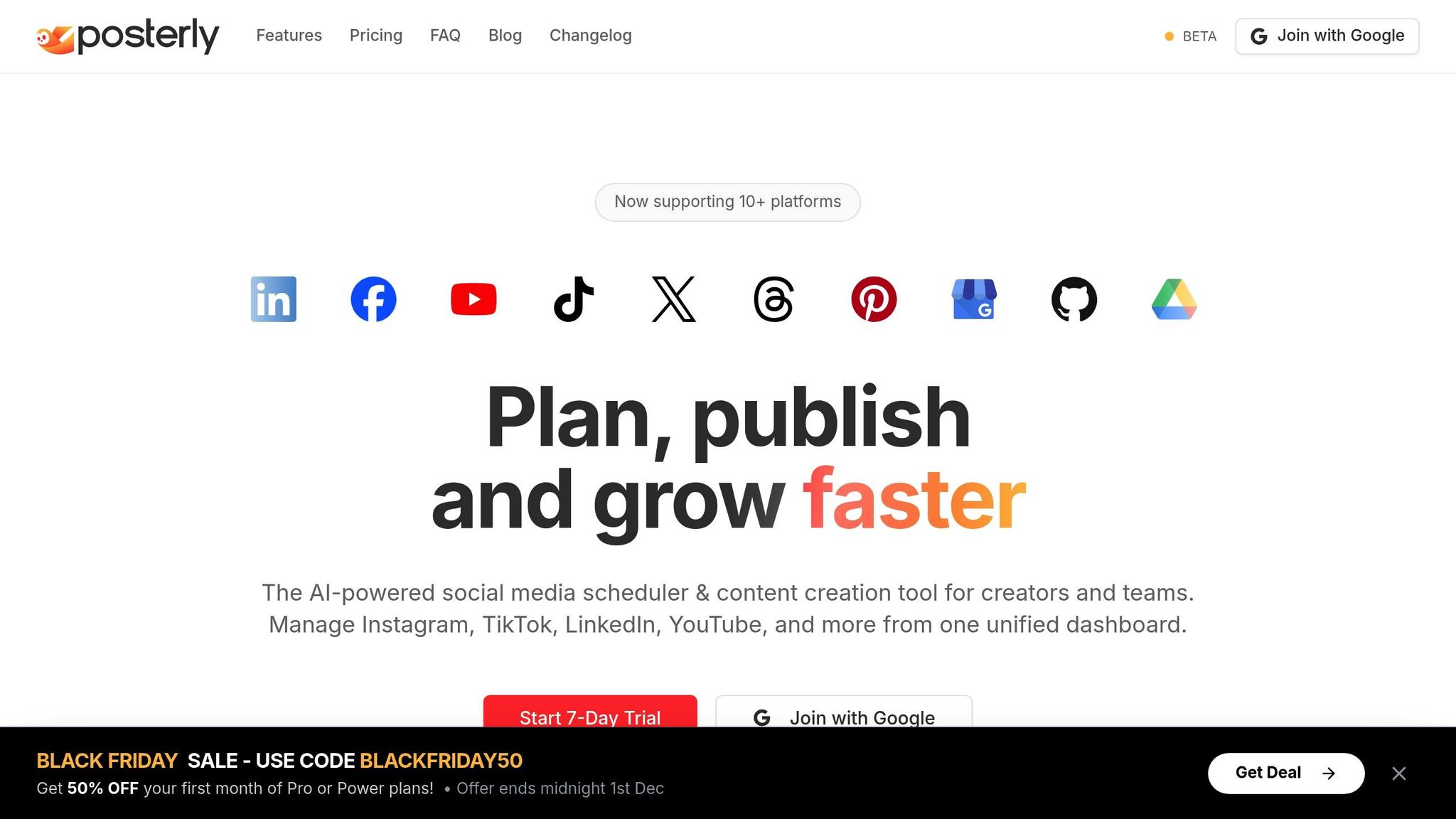
Once you’ve assessed your performance, the next step is finding the right tool to streamline your content management. Posterly takes the hassle out of manual scheduling by automating the entire publishing process with AI. Instead of hopping between platforms and tweaking content for each, you can manage everything from one dashboard, while the AI takes care of the repetitive tasks. This automation doesn’t just save time - it sets the stage for a more efficient workflow, as detailed below.
Smart Scheduling and Content Optimization
Posterly’s AI simplifies scheduling by analysing audience behaviour and pinpointing the best times to post on each platform. For example, if your audience in the UAE is most active during specific peak hours, Posterly identifies these windows and ensures your posts go live at the right moments. This means you can plan an entire week’s worth of content in one session, confident that it will reach your audience when engagement is highest.
The platform supports over 10 social media channels - including Instagram, TikTok, LinkedIn, YouTube, and X - all from one centralised dashboard. It even resizes and reformats content automatically to suit the requirements of each platform.
To avoid common errors, Posterly includes smart validation tools that flag duplicate posts or scheduling conflicts before they’re published. This feature is a lifesaver for teams managing multiple accounts or juggling complex schedules.
AI-Assisted Caption Writing and Automation
Crafting captions that fit each platform’s tone and style can be a tedious task. Posterly’s Caption Assist takes over by generating tailored captions, hashtags, and content variations for each channel. For instance, a LinkedIn post might require a professional tone and industry-specific hashtags, while an Instagram post might benefit from a casual vibe and trending tags.
With Hey Posterly AI, scheduling posts becomes as easy as having a conversation. You can simply give natural language commands like, “Schedule a post about our new product launch on Instagram and LinkedIn for tomorrow at 8:00 PM,” and the AI will handle everything - from generating captions to formatting the post and adding it to the queue.
For visual content, Nano Banana AI is your go-to tool. It can create, edit, and enhance high-resolution visuals based on your descriptions. Need a branded graphic for an upcoming campaign? Just describe what you’re envisioning, and the AI will deliver it - no need for separate design software or outsourcing.
These features are particularly helpful for creators and teams managing large volumes of content. Posterly offers flexible pricing plans: AED 25.70 per month for limited Caption Assist uses, AED 55.15 for unlimited captions, or AED 91.90 for access to the full suite of AI features.
Adding Posterly to Your Workflow
Getting started with Posterly is simple. The unified dashboard offers calendar, list, and table views, allowing you to plan and track content in a way that suits your preferences. If you like visual planning, the calendar view lets you drag and drop posts onto specific dates and times. For more detailed planning, the table view provides an organised snapshot of all scheduled content, complete with filtering options.
One standout feature is Ship & Share, which transforms GitHub commits into social media posts. If you’re a developer or manage a tech brand, this tool automatically converts technical updates - like new features or bug fixes - into engaging content for your audience. No more manually crafting posts about product updates; the AI takes care of it.
Real-time queue monitoring gives you full control over your scheduled content. You can review upcoming posts, make last-minute changes, or pause content entirely - all from the same dashboard. This flexibility is especially useful when unexpected events require a quick pivot in your content strategy.
For teams, Posterly makes collaboration seamless. Multiple users can access the dashboard, schedule posts, and review content without overlapping responsibilities. The smart validation system prevents scheduling conflicts, while the unified view ensures everyone stays on the same page about what’s being published and when.
Whether you’re a solo creator managing a few accounts or part of a team handling dozens, Posterly’s AI tools take the heavy lifting out of content management. By automating tasks like resizing images, writing captions, and finding the best posting times, Posterly lets you focus on creating content that connects with your audience, instead of getting bogged down in the details.
Conclusion
Managing posts across multiple platforms can be a breeze with the right approach. It all comes down to thoughtful planning, tailoring your content for each platform, and using automation tools to handle repetitive tasks seamlessly.
Start by identifying the platforms where your audience spends most of their time. Once you’ve pinpointed these channels, map out a content calendar to schedule posts in advance. This not only keeps your strategy consistent but also saves you from last-minute content creation stress. A well-organised calendar lets you batch-create posts, ensuring you’re always ahead of the game.
Next, focus on customising your content for each platform. Every channel has its quirks - whether it’s character limits, preferred formats, or the tone your audience expects. For audiences in the UAE, take into account local timing preferences and cultural nuances to ensure your content resonates effectively.
Timing is everything. Use engagement data to refine your posting schedule, aligning it with peak activity times on each platform. This way, your posts are more likely to reach and engage your audience.
Lastly, leverage AI-driven tools like Posterly to simplify the process. These tools can help with everything from optimising your content to writing captions and scheduling posts. With AI handling the technical details, you can manage multiple platforms effortlessly from a single dashboard. By combining these strategies, you’ll maintain steady engagement and strengthen your digital presence in the UAE.
FAQs
::: faq
How can I identify the best social media platforms to connect with my audience in the UAE?
To connect with your audience in the UAE, it's essential to consider local preferences and trends. Popular platforms in the region include Instagram, TikTok, Facebook, LinkedIn, and YouTube - each serving different demographics and content styles.
Start by analysing your audience’s behaviour. Look at metrics like likes, shares, and comments to identify where your followers are most active. Also, think about the type of content you create. For instance:
- Instagram and TikTok: Perfect for visual content, lifestyle, and fashion-related posts.
- LinkedIn: Best suited for professional and B2B-focused content.
- YouTube: Ideal for long-form videos and tutorials.
By aligning your strategy with these insights, you can focus on the platforms that resonate most with your audience, ensuring better engagement and a stronger online presence. :::
::: faq
How can I tailor content for different social media platforms while ensuring a consistent brand voice?
To tailor content for different social media platforms without losing your brand’s voice, it’s important to first understand the audience and style unique to each platform. For instance, Instagram is all about eye-catching visuals and concise captions, while LinkedIn leans towards professional, detailed posts.
Keep your brand identity consistent by using the same tone, messaging, and visual elements such as logos, colours, and fonts across all platforms. This consistency helps build recognition and trust. When repurposing content, adapt it thoughtfully to suit the platform’s format and audience while retaining the original message. For example, a detailed blog post could become a quick, engaging tweet or an Instagram story.
Timing also plays a big role in reaching your audience. Use analytics to identify when your followers are most active on each platform, and plan your posts accordingly. This ensures your content not only aligns with the platform but also connects with the right audience at the right time. :::
::: faq
How can Posterly help streamline post scheduling across multiple social media platforms?
Posterly makes managing your social media a breeze by leveraging AI-driven tools to automate and streamline your content distribution. This means you can plan, schedule, and publish posts with ease, saving valuable time while keeping your social media presence consistent and organised.
What sets Posterly apart is its ability to customise posts for each platform. It takes into account factors like the best times to post and audience engagement patterns, helping ensure your content connects with the right people at the perfect moment. :::
Related Articles
How to Create 30 Days of Social Media Content Using AI Images in posterly
A practical guide to generating a full month of original social media images with posterly's AI image tool, writing captions for each one, and scheduling everything in a single session.
Read moreHow to Find the Best Time to Post on Social Media Using posterly's AI Scheduler
Stop guessing when to post. This guide explains how posterly's AI Scheduler analyses your audience activity and automatically picks the best posting times so your content gets seen by more people.
Read moreHow to Manage Google Business Reviews on Autopilot With posterly
A step-by-step guide to responding to Google reviews with AI, automatically requesting new reviews from customers, auditing your profile for local SEO, and turning your best reviews into social media content.
Read moreHow to Manage Multiple Client Social Media Accounts With posterly Workspaces
A practical guide for agencies and teams on using posterly Workspaces to organise client accounts, assign roles, get content approved, and schedule posts across dozens of social profiles without things getting messy.
Read more