
Best Social Media Scheduling Tools 2026: Honest Side-by-Side Test
We tested 8 social media schedulers in 2026 on price, AI quality, platform coverage, and reliability. The winners and the tools to avoid.

8 Best Social Media Scheduling Tools for 2026
Managing social media in 2026 is no small task, especially with multiple platforms, evolving algorithms, and the constant need for fresh content. The right scheduling tools can save you time and keep your branding consistent across platforms like Instagram, TikTok, LinkedIn, X (formerly Twitter), and Facebook. Here’s a quick rundown of the top 8 tools, their standout features, and pricing for UAE users:
-
posterly: Affordable plans with unlimited scheduling, AI-assisted captions, and GitHub integration. Plans start at AED 25.70/month.
-
Planable: Collaboration-first scheduler built around content approval workflows, ideal for teams and agencies. Free plan available; paid plans start at $33/workspace per month (around AED 121), with unlimited users on every tier.
-
SocialPilot: Ideal for teams, offering bulk scheduling and multi-platform support. Starts at AED 110.20/month.
-
Sendible: Tailored for agencies with client management tools and white-labelling. AED 109.50/month.
-
Buffer: Beginner-friendly, with a free plan and strong analytics. Paid plans start at AED 21.90/month.
-
eClincher: Designed for large organisations, with advanced inbox and monitoring tools. AED 239.80/month.
-
Later: Best for visual planners, with drag-and-drop calendars and Instagram-focused features. AED 73/month.
-
Hootsuite: Enterprise-level solution with robust collaboration tools. AED 365/month.
Each tool offers unique features like AI-powered captions, bulk scheduling, and multi-platform compatibility. Choose based on your needs, budget, and the platforms you manage. Below is a quick comparison table to help you decide.
Best Social Media Management Tools 2026: Hootsuite vs Later vs Buffer | The ULTIMATE review!
::: @iframe https://www.youtube.com/embed/-viW9Lh07BY :::
Quick Comparison
| Tool | AI Features | Bulk Scheduling | Platform Support | Starting Price (AED) |
|---|---|---|---|---|
| posterly | AI captions, image generation | Unlimited across plans | 10+ platforms, incl. Threads, Bluesky | 25.70 |
| Planable | AI caption generation | Calendar + queue scheduling | 9 platforms, incl. Threads, TikTok | 121.20 |
| SocialPilot | AI content suggestions | 500 posts per upload | 8 platforms | 110.20 |
| Sendible | AI-powered recommendations | 300 posts per upload | 10 platforms | 109.50 |
| Buffer | AI captions, posting insights | 100+ posts per upload | 11 platforms | 21.90 |
| eClincher | AI inbox, sentiment analysis | 1,000 posts via CSV | 30+ platforms | 239.80 |
| Later | AI captions, hashtag suggestions | 150 posts via CSV | 6 platforms | 73 |
| Hootsuite | AI captions, analytics insights | Hundreds via CSV | 7 platforms | 365 |
Choosing the right tool depends on your workload, budget, and platform needs. Test free trials to see which fits your workflow best.
1. posterly
Posterly is a tool powered by AI, designed to make social media scheduling and content creation more efficient. With support for over 10 major platforms - like Instagram, TikTok, LinkedIn, and YouTube - posterly brings everything together in one dashboard. This means you can plan and publish content without the hassle of jumping between different apps.
AI-Powered Content Creation
Posterly comes with three AI-driven tools to streamline content creation:
-
AI Caption Assist: Helps craft captions that align with your brand's voice, saving time on writing.
-
Nano Banana: Lets you create custom images for your posts directly within the platform.
-
Hey posterly: Acts as a smart scheduling assistant. For example, you can say, "Schedule this for tomorrow morning at 9 AM", and it will handle the rest.
These tools not only simplify the creative process but also make scheduling a breeze.
Bulk Scheduling Made Simple
Posterly goes beyond individual posts and offers bulk scheduling across all pricing plans. Its drag-and-drop calendar interface makes it easy to visualise and tweak your content schedule. You can monitor your queue in real time and avoid duplicate posts effortlessly. For those in tech, the Ship & Share feature uses GitHub commits to generate marketing content, seamlessly connecting technical updates with your social media strategy.
Flexible Platform Support
Posterly’s plans are tailored to different needs:
-
Starter Plan: Connects up to 5 social accounts.
-
Pro Plan: Expands to 12 social accounts.
-
Power User Plan: Supports up to 30 social accounts.
Integration with Google Drive is included, giving you direct access to your stored assets for even easier content management.
Pricing Breakdown
Posterly’s pricing is designed with creators in mind, offering a robust set of features at competitive rates:
-
Starter Plan: AED 25.70/month. Includes 5 social accounts, unlimited scheduled posts, 30 AI Caption Assist uses, 10 Nano Banana image generations, 5 Hey posterly scheduling requests, and 1 Ship & Share integration.
-
Pro Plan: AED 55.10/month. Covers 12 social accounts, unlimited AI Caption Assist, 30 Nano Banana uses, 15 Hey posterly requests, and 10 Ship & Share integrations each month.
-
Power User Plan: AED 91.80/month. Offers 30 social accounts and unlimited access to all AI features under fair-use guidelines.
All plans come with straightforward monthly pricing - no hidden fees.
2. Planable
Planable takes a collaboration-first approach to social media scheduling, built around the review-and-approval process rather than just the calendar. If your posts need sign-off, whether from a manager, a client, or a legal team, before they go live, Planable is designed to make that workflow painless. That focus has made it a favourite among agencies and in-house marketing teams across the UAE that juggle multiple stakeholders.
Collaboration and Approval Workflows
Planable's biggest strength is its layered approval system. You can require one or more rounds of approval before a post publishes, leave feedback as inline comments directly on each post, and keep internal drafts visible only to your team. Higher tiers unlock multi-level approvals spanning team members, clients, internal reviewers, and stakeholders, so nothing goes out without the right people signing off. Content can be previewed in feed, grid, calendar, or list views, giving everyone an accurate picture of how a post will look once it is live.
AI-Powered Content Creation
Planable includes an AI assistant that helps generate, rewrite, and refine captions, letting you move from a rough idea to a polished post without leaving the platform. Paired with its visual previews, this keeps the creative and review stages in one place.
Platform Support
Planable supports nine major networks: Instagram, Facebook, LinkedIn, X (formerly Twitter), YouTube, TikTok, Pinterest, Google Business Profile, and Threads. Analytics are available for most of these, helping teams connect their approval-driven workflow back to real performance.
Pricing Breakdown
Planable is priced per workspace rather than per user, and every plan includes unlimited users, which is unusual and genuinely team-friendly:
-
Free Plan: 50 posts in total, no credit card required, ideal for trialling the workflow.
-
Basic Plan: $33/workspace per month (around AED 121), covering 60 posts per workspace each month.
-
Pro Plan: $49/workspace per month (around AED 180) for 150 posts per workspace and the full approval toolkit.
-
Enterprise Plan: Custom pricing with unlimited posts and multi-level approvals.
For UAE agencies managing several client brands, the per-workspace model and unlimited seats can work out far cheaper than per-user tools once your team grows.
3. SocialPilot
SocialPilot simplifies social media management with tools like a visual calendar and bulk scheduling. Its calendar makes planning posts straightforward, while bulk scheduling allows you to queue multiple updates at once. Plus, it automatically adjusts posting times to match different time zones, including those in the UAE, ensuring your audience stays engaged at the right moments.
Platform Support
With its unified dashboard, SocialPilot makes managing multiple platforms a breeze. You can oversee all your social media accounts in one place, maintaining a consistent presence across networks. The dashboard also provides performance insights without requiring you to jump between apps. Up next, let’s dive into more features that help streamline social media management.
4. Sendible
Sendible is a powerful tool designed with agencies and growing teams in mind. It combines essential scheduling capabilities with creative tools, all while keeping costs manageable. This makes it an excellent choice for handling multiple client accounts from a single platform, ensuring a steady and professional social media presence.
AI-Powered Content Creation
Juggling multiple accounts can be overwhelming, but Sendible’s AI assistant steps in to streamline the process by automatically refining captions[4]. It also integrates directly with Canva and Pexels, making it easy to create visually appealing content. Additionally, features like Google News alerts, holiday reminders, and RSS feed integrations help spark fresh content ideas and keep your posts relevant[1].
Bulk Scheduling Made Easy
With Sendible’s bulk scheduling feature, you can plan entire campaigns in one go. Whether you’re scheduling individual posts or managing queued content, this tool simplifies the process, saving you time and effort.
Broad Platform Compatibility
Sendible supports a wide range of platforms, including Instagram, Facebook, TikTok, LinkedIn, Google Business Profile, YouTube, WordPress, Pinterest, and X (formerly Twitter)[4][5]. This versatility allows you to oversee your entire social media strategy from one centralised dashboard. For businesses in the UAE targeting varied audiences, this feature is particularly beneficial. Moreover, its agency-focused tools enable you to create separate client dashboards and even white-label the interface to reflect your branding[1][5].
Affordable Pricing
Starting at just AED 106 per month (approximately $29), Sendible offers a cost-effective solution for teams looking to scale. Plus, you can save 15% with an annual subscription. Features like custom client dashboards and white-labelling add even more value for agencies and growing teams.
Sendible strikes a balance between affordability, functionality, and scalability. Its robust features and focus on collaboration make it a reliable choice for managing multiple accounts and client portfolios, ensuring your business can adapt and grow seamlessly.
5. Buffer
Buffer has earned the trust of over 100,000 businesses, with 191,726 monthly active users and an impressive 7,858,881 posts published just last month [6]. These numbers speak volumes about its dependability.
AI-Powered Content Creation
Buffer's AI caption assistant, included even in the Free plan, helps craft engaging captions quickly and effectively. For businesses in the UAE juggling content in both English and Arabic, this tool ensures a consistent tone across languages and platforms, making it easier to maintain a cohesive brand identity.
Bulk Scheduling Made Easy
Planning content in advance is a breeze with Buffer's bulk scheduling. On the Essentials plan, you can queue unlimited posts per profile, while the Team plan allows up to 2,000 scheduled posts per profile. This flexibility ensures your social media remains active, even during busy periods. Whether you're planning weeks or months ahead, Buffer keeps your content calendar on track. And when paired with its extensive platform support, the scheduling process becomes even more versatile.
Platform Support
Buffer doesn't just stop at content creation - it offers extensive support for 11 major social media platforms. These include Facebook, Instagram, TikTok, X (formerly Twitter), YouTube, LinkedIn, Pinterest, and Google Business Profile, as well as newer platforms like Threads, Mastodon, and Bluesky [6]. Beyond platform coverage, Buffer provides features like approval workflows, workspaces, and a unified inbox to manage interactions across all connected accounts. Its mobile app replicates the full desktop experience, allowing seamless management anytime, anywhere.
"Buffer is a great free tool for beginners and the one I'd recommend most to anyone who needs an easy, no-fuss tool that gets the job done - a straightforward social media scheduling tool.", Audrey Rawnie Rico, Social Media Manager, TechnologyAdvice [2]
Pricing Options
Buffer’s pricing is structured to cater to a wide range of needs. The Free plan includes 1 user, 3 channels, and 10 queued posts per profile [2]. For those needing more robust features, the Essentials plan costs AED 18/month per channel (billed annually) or AED 22/month (billed monthly), offering unlimited posts for one user [2]. The Team plan, priced at AED 37/month per channel (annually) or AED 44/month (monthly), supports unlimited users and up to 2,000 scheduled posts per profile [2].
This per-channel pricing model is particularly budget-friendly for small businesses and agencies managing a select number of accounts. With an Annual Recurring Revenue (ARR) of $22.6 million and a team of 73 professionals spread across 15 countries, Buffer showcases its financial stability and global reach - qualities that resonate with businesses in the UAE [6].
Buffer’s straightforward approach and focus on essential features make it a go-to choice for those seeking reliable scheduling tools without unnecessary complexity. It ensures you can manage your social media efficiently, leaving you free to concentrate on growing your business.
sbb-itb-f7b3a33
6. eClincher
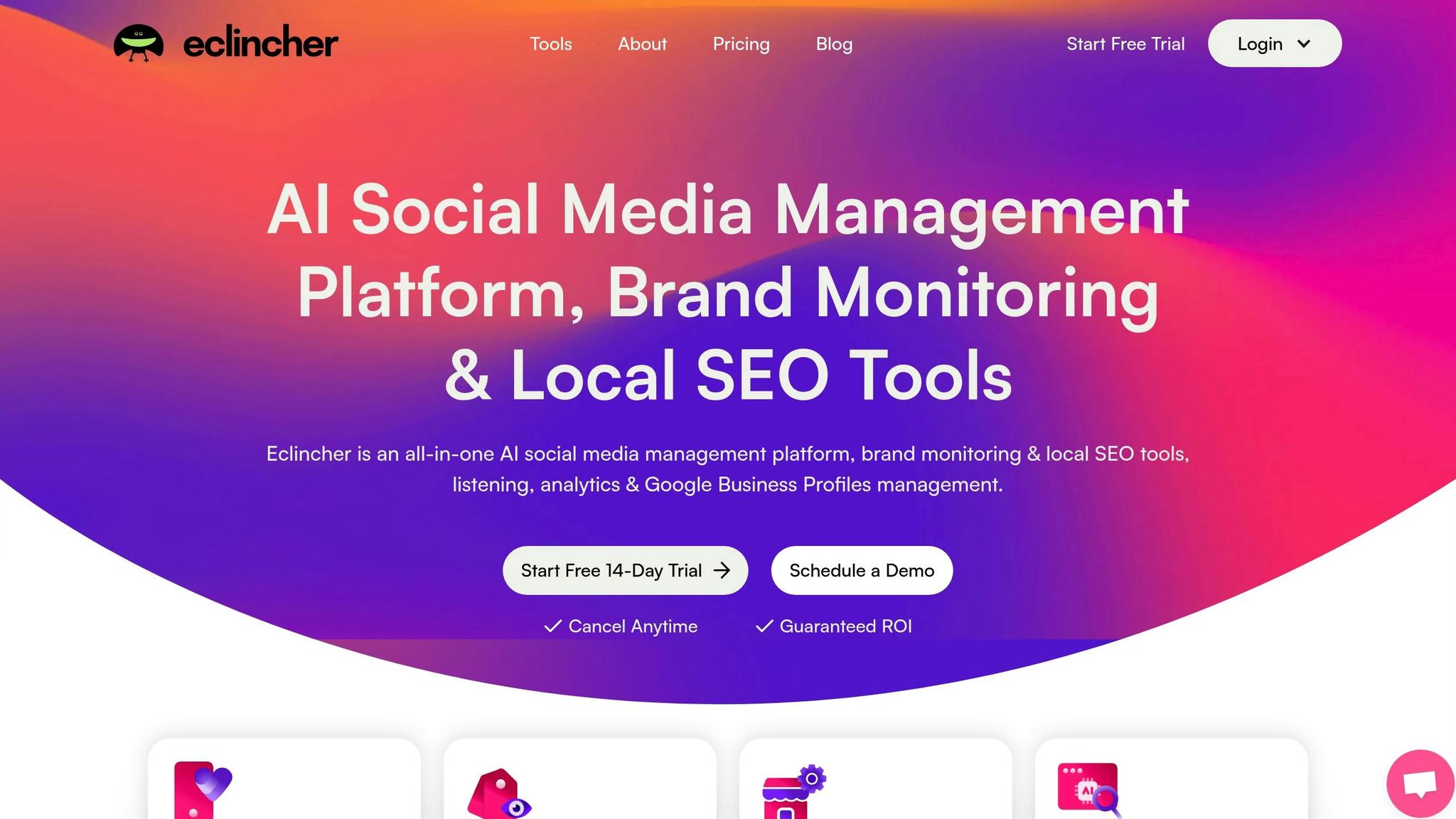
eClincher is designed with enterprise-level social media management in mind, making it a go-to solution for large organisations and marketing teams. If you're managing social media for a major company in the UAE, this platform offers the tools and scalability needed to streamline operations across multiple accounts [1][3].
AI-Powered Content Creation
With its AI-driven scheduling tools, eClincher simplifies the process of planning and managing content for large-scale operations. This feature reduces the manual workload involved in handling multiple social channels, allowing you to focus on refining your content strategy [1][3].
Broad Platform Integration
eClincher supports over 30 social media platforms, providing a unified inbox that brings together messages from all your connected accounts. This feature ensures that your team can respond quickly to inquiries without juggling multiple tools, improving overall efficiency and responsiveness [1][3].
Managing Your Online Reputation
In addition to its integration capabilities, eClincher monitors digital conversations, offering insights into audience feedback and potential issues. This functionality helps you stay proactive in addressing customer concerns and maintaining a strong online presence across all channels [1][3].
Pricing Considerations
eClincher operates at a premium price point, reflecting the depth of its features. While the exact cost depends on your specific needs, its extensive functionality is tailored to meet the demands of enterprise-level social media management, making it a valuable investment for handling complex strategies and multiple accounts [1][3].
7. Later
Later has carved out a niche as a go-to tool for visual content planning, making it especially appealing for UAE businesses and creators who prioritise platforms centred around images. Its standout feature? A visual-first approach that allows you to preview your feed before hitting publish. This is a game-changer for maintaining a polished and consistent brand aesthetic across your social media channels.
Platform Support
Later is compatible with all the major social media platforms used by UAE-based creators and businesses, including Instagram, Facebook, TikTok, LinkedIn, Pinterest, and YouTube. Its drag-and-drop visual content calendar makes it easy to rearrange posts and fine-tune your schedule. This is particularly handy for retail brands, hospitality businesses, and lifestyle influencers who need to keep their online presence visually appealing and well-organised.
Bulk Scheduling Made Easy
In addition to its visual planning tools, Later streamlines content management with its bulk scheduling feature. You can upload weeks’ worth of content in one go, complete with captions and hashtags added in batches. This not only saves time but also frees you up to focus on creating engaging content.
AI Tools for Content Creation
Later also incorporates AI to make content creation smoother. It can help refine captions and suggest hashtags, giving you a solid starting point for boosting engagement. While these tools won’t replace a well-thought-out strategy, they’re a great support system when juggling multiple accounts or dealing with creative fatigue.
Pricing Options
Later offers a free plan that includes one social set per platform, making it an accessible option for small businesses and solo creators. For growing businesses in the UAE, its paid plans unlock more features and increased scheduling capacity, catering to evolving content needs without breaking the bank.
8. Hootsuite
Hootsuite is a powerful social media management platform designed to simplify even the most complex campaigns. For UAE-based businesses juggling multiple brands or large-scale operations, this tool offers the versatility and depth needed to coordinate efforts across teams and platforms. By combining an intuitive platform, advanced scheduling options, and AI-powered tools, Hootsuite helps streamline social media strategies for businesses in the UAE.
Platform Support
Hootsuite supports a wide range of social media platforms, making it a practical choice for businesses with diverse digital footprints. From Instagram and Facebook to Twitter (X), LinkedIn, YouTube, Pinterest, and TikTok, you can manage all your accounts from a single, unified dashboard. This setup is particularly useful for UAE businesses maintaining active profiles across multiple channels, as it allows you to monitor and manage all social activity in one place, saving time and effort.
Bulk Scheduling Capacity
For businesses managing large volumes of content, Hootsuite's bulk scheduling feature is a game changer. You can upload hundreds of posts at once using a CSV file, which is especially helpful during high-demand periods like Ramadan, the Dubai Shopping Festival, or year-end sales. With this feature, you can plan your entire campaign ahead of time, upload all your posts in one go, and let Hootsuite handle the scheduling according to your timeline. This ensures a consistent posting schedule without the daily hassle.
AI-Powered Content Creation
Hootsuite also integrates AI-driven tools to enhance your content creation process. These features can help generate caption ideas, recommend the best posting times based on audience activity, and suggest hashtags to improve reach. By analysing your past performance data, Hootsuite provides insights that can refine your content strategy. While these AI tools won't replace your creative team, they act as a helpful assistant, especially when managing multiple accounts or maintaining consistency during busy periods.
Pricing and Affordability
Hootsuite's pricing reflects its advanced capabilities, with plans that scale depending on the number of social accounts and users you need to manage. A 30-day trial is available, which gives you a chance to explore its features before committing. For UAE businesses, pricing is listed in US dollars, so you'll need to account for currency conversion when budgeting. This platform is best suited for medium to large organisations, marketing agencies, or businesses managing multiple brands that require detailed analytics, team collaboration tools, and sophisticated scheduling options. Check out the next section for a comparative table to see how Hootsuite measures up against other tools.
Feature Comparison Table
Here’s a quick comparison of popular tools, highlighting their AI features, bulk scheduling capabilities, platform support, and pricing - key factors for users in the UAE.
| Tool | AI Capabilities | Bulk Scheduling | Platform Support | Starting Price (Monthly) | Key Strengths |
|---|---|---|---|---|---|
| posterly | AI Caption Assist (30/month on Starter), Nano Banana image generation (10/month), Hey posterly scheduling (5/month), Ship & Share for GitHub commits (1/month) | Unlimited scheduled posts across all plans | Instagram, TikTok, LinkedIn, YouTube, Facebook, Twitter (X), Pinterest, Google Business Profile, Threads, Bluesky | AED 25.70 | Budget-friendly, unlimited scheduling, GitHub integration, drag-and-drop interface |
| Planable | AI caption generation and rewriting, content assistant | Calendar and queue scheduling across feed, grid, and list views | Instagram, Facebook, LinkedIn, Twitter (X), YouTube, TikTok, Pinterest, Google Business Profile, Threads | Free; AED 121.20 (Basic) | Best-in-class approval workflows, unlimited users per workspace, agency-friendly |
| SocialPilot | AI content suggestions, caption generation, hashtag recommendations | Up to 500 posts per upload via CSV | Facebook, Instagram, Twitter (X), LinkedIn, Pinterest, TikTok, Google Business Profile, Tumblr | AED 110.20 | Ideal for teams, white-label reports for agencies |
| Sendible | AI-powered content recommendations, smart queues, automated posting suggestions | Up to 300 posts via bulk upload | Facebook, Instagram, Twitter (X), LinkedIn, YouTube, Google Business Profile, TikTok, Pinterest | AED 109.50 | Custom workflows, client management tools, CRM integration |
| Buffer | AI caption assistant, optimal timing suggestions, performance insights | Up to 100 posts per bulk upload | Instagram, Facebook, Twitter (X), LinkedIn, Pinterest, TikTok, YouTube, Google Business Profile, Mastodon | AED 21.90 (basic); AED 43.80 (advanced) | Simple interface, beginner-friendly, strong analytics |
| eClincher | AI content curation, smart inbox with sentiment analysis, automated responses | Up to 1,000 posts via CSV upload | Facebook, Instagram, Twitter (X), LinkedIn, YouTube, Pinterest, Google Business Profile, TikTok, Yelp | AED 239.80 | Unified inbox, advanced listening tools, media library |
| Later | AI caption writing, best time to post recommendations, hashtag suggestions | Up to 150 posts via CSV import | Instagram, Facebook, Twitter (X), LinkedIn, Pinterest, TikTok, YouTube | AED 73 | Visual calendar, Instagram-centric design, link-in-bio tool |
| Hootsuite | AI caption generation, optimal posting times, hashtag suggestions, performance analysis | Hundreds of posts via CSV upload | Instagram, Facebook, Twitter (X), LinkedIn, YouTube, Pinterest, TikTok | AED 365 | Enterprise-level features, extensive integrations, team collaboration |
This table provides a snapshot of each tool’s strengths, helping you find the best fit for your social media strategy in the UAE.
Key Considerations for UAE Users
When choosing a tool, weigh your budget against your operational needs. For example, posterly stands out with its affordable pricing (AED 25.70/month) and unlimited scheduling - ideal for solo creators and small businesses. If you’re managing high-volume campaigns, platforms like eClincher or Hootsuite offer the capacity to handle hundreds or even thousands of scheduled posts, though they come at a higher cost.
Platform support is another critical factor. Posterly covers over 10 platforms, including emerging ones like Threads and Bluesky, making it a great choice if you're experimenting with newer networks to connect with younger audiences in the UAE. Other tools, while comprehensive, may focus more on established platforms.
AI features also vary widely. Posterly’s Nano Banana tool generates custom images, while its Hey posterly feature simplifies scheduling. On the other hand, tools like Buffer and Hootsuite focus on refining captions, finding the best posting times, or offering performance insights. If you’re managing bilingual content or juggling multiple platforms, these AI tools can save you time and effort.
Pricing structures often depend on scalability. Tools like posterly, Buffer, and Later offer tiered plans, making them suitable for freelancers or small teams. Meanwhile, platforms like SocialPilot and Sendible cater to agencies and larger organisations with advanced collaboration features and robust analytics.
For UAE-based users, it’s worth checking whether the tool supports UAE-issued cards and if VAT is included in the pricing. Additionally, having access to customer support during Gulf Standard Time business hours can be a practical advantage.
Conclusion
Picking the right social media scheduling tool in 2026 is all about understanding what works best for your specific needs and workflow. Whether you're a solo creator or part of a larger agency, your requirements will vary, and no single tool can cater to everyone.
Your budget is a key factor. Smaller businesses might lean toward affordable plans, while larger organisations may need premium options with advanced features.
Another game-changer is AI integration. From generating captions and creating visuals to offering smart scheduling suggestions, AI tools can save time and improve efficiency. Some platforms specialise in refining captions and suggesting hashtags, while others focus on visual content creation - an especially handy feature for producing bilingual posts that resonate with the UAE's diverse audience. Pair these AI tools with your budget and the platforms you rely on to make the most of your social media efforts.
Speaking of platforms, platform coverage is critical. Make sure the tool you choose supports the social networks your audience uses most - whether that's emerging platforms like Threads and Bluesky or established ones like Instagram and LinkedIn.
Before committing, take a close look at your workflow. Think about how many posts you schedule each week, whether you manage multiple accounts, and if collaboration tools are a must for your team. Decide if you prefer the simplicity of CSV bulk uploads or a more visual drag-and-drop interface.
Take advantage of free trials to test the tool’s interface and AI features. Check how well it integrates with your current processes. Also, consider practical details like customer support availability during GST business hours and whether VAT is included in the pricing - these small details can make a big difference.
Ultimately, choose a tool that not only meets your current needs but also adapts to the ever-changing social media landscape, helping you stay ahead as your strategy evolves.
FAQs
::: faq
How can AI-powered features in social media scheduling tools improve content creation and scheduling efficiency?
AI-driven functionalities in social media scheduling tools are transforming how content is created and shared. These tools analyse audience behaviour, trends, and engagement data to suggest the optimal posting times, recommend effective hashtags, and even provide content ideas that resonate with your audience.
Beyond that, AI takes over repetitive tasks like scheduling posts across various platforms, ensuring everything runs smoothly and consistently. This frees up creators and marketers to focus on developing impactful content, while the tools handle the behind-the-scenes work, saving time and enhancing efficiency. :::
::: faq
What should UAE businesses look for in a social media scheduling tool to manage multiple platforms effectively?
When selecting a social media scheduling tool, businesses in the UAE should focus on platform compatibility to ensure it works seamlessly with all their active channels. Key features to look for include an easy-to-use content calendar, workflow management to streamline team collaboration, and tools that help pinpoint the best posting times for engaging with the UAE audience.
It’s also helpful to choose tools that offer a content library for organising assets, analytics to monitor performance, and options for automation and integration with other software you rely on. Finally, evaluate pricing carefully - make sure it fits your budget, accounts for AED currency, and supports scalability as your business grows. :::
::: faq
What should businesses consider when choosing the right social media scheduling tool for their needs and budget?
To find the right social media scheduling tool, businesses should prioritise factors such as cost, platform compatibility, and user-friendliness. Check if the tool works seamlessly with the social media platforms you rely on and offers valuable features like automation, content planning, and in-depth analytics to simplify your workflow.
It's also important to think about your budget. Choose a tool that delivers good value for its price and offers room to scale as your business grows. This is particularly important if you're juggling multiple accounts or working with a team. By matching the tool's features to your specific needs, you can boost productivity without overspending. :::
Related Articles
10 Time-Saving Tips for Social Media Content Creators
Batched workflows, AI shortcuts, and templates creators use to ship more content with less effort. Practical wins, not productivity theatre.
Read moreBuffer vs Hootsuite 2026: Pricing, Features & Who Wins for Whom
Buffer and Hootsuite compared head-to-head in 2026: real prices, post limits, AI features, and which one fits solo creators, teams, or agencies.
Read moreAI vs Manual Content Writing: 2026 Cost, Speed & Quality Test
Real 2026 benchmarks: AI vs hand-written content compared on price per post, time per post, and engagement. When AI wins, when humans still win.
Read moreAI Infographic Tools for SaaS Marketing
AI Infographic Tools for SaaS Marketing
Read more