
Cross-Posting vs. Platform-Specific Content: Key Differences
Cross-Posting vs. Platform-Specific Content: Key Differences
Cross-Posting vs. Platform-Specific Content: Key Differences
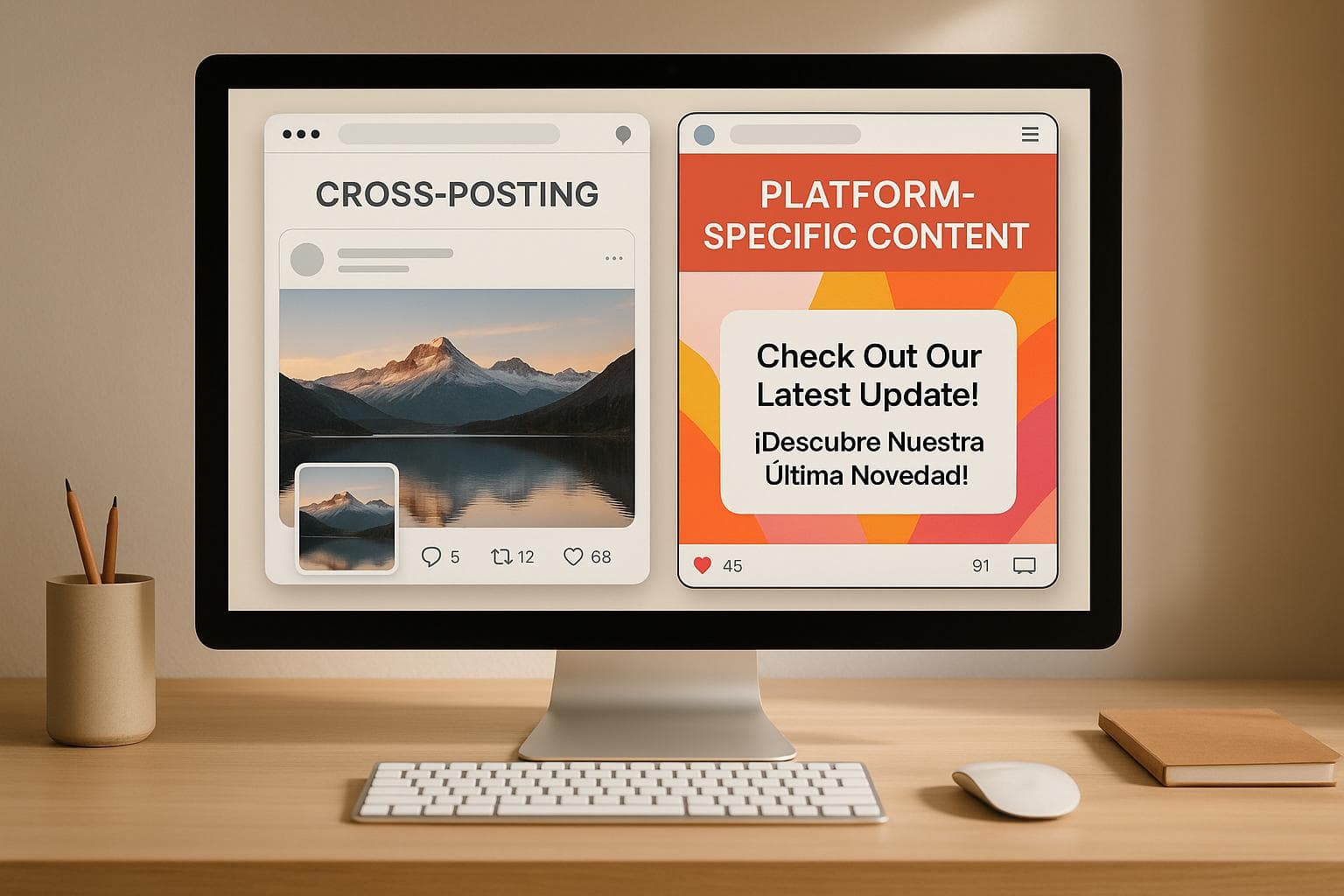
Should you cross-post or tailor content for each platform? It depends on your goals, resources, and audience. Cross-posting saves time by sharing similar content across platforms like Instagram, TikTok, and LinkedIn with minor tweaks, while platform-specific content involves crafting posts to suit each platform's unique style and audience. For UAE brands, balancing these approaches is key, considering the region's bilingual, mobile-first audience and cultural norms.
Key takeaways:
- Cross-posting is efficient and works well for quick campaigns, product launches, and event promotions. However, mismatched formats, captions, or hashtags can hurt engagement.
- Platform-specific content offers better engagement by tailoring posts to each platform’s audience, e.g., professional tone for LinkedIn or trending sounds for TikTok. This requires more effort but aligns better with UAE preferences like bilingual captions and local themes.
- A hybrid approach works best: cross-post core content and customise for priority platforms like Instagram or LinkedIn.
Quick Comparison:
| Factor | Cross-Posting | Platform-Specific Content |
|---|---|---|
| Effort | Low to medium | High |
| Engagement | Moderate | Higher |
| Local Relevance (UAE) | Limited adjustments (e.g., AED pricing) | Deep localisation (e.g., bilingual, cultural themes) |
| Scalability | Easy | Less scalable |
For UAE brands, tools like Posterly simplify both approaches by helping customise and schedule posts across platforms while saving time. Choose the method that aligns with your team size, goals, and audience priorities.
::: @figure 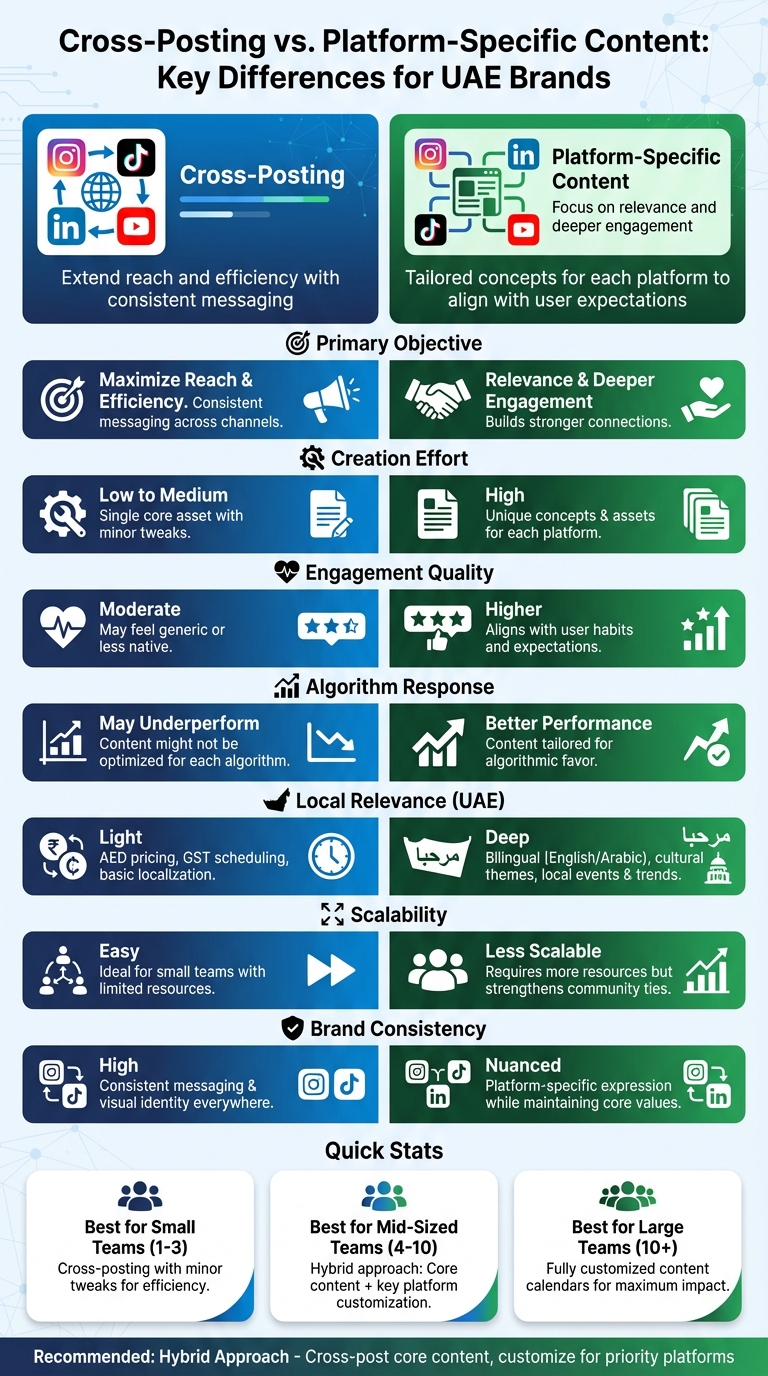 {Cross-Posting vs Platform-Specific Content: Complete Comparison Guide}
:::
{Cross-Posting vs Platform-Specific Content: Complete Comparison Guide}
:::
What Is Cross-Posting?
Definition and Use Cases
Cross-posting involves sharing the same main content across multiple social media platforms - like Instagram, TikTok, LinkedIn, and YouTube - with only slight adjustments to captions, formats, or timing. It’s different from repurposing, where content is fully reworked into new formats (for instance, turning a YouTube tutorial into a LinkedIn article). With cross-posting, the core content stays the same, requiring only minimal tweaks for each platform.
In the UAE, cross-posting is widely used for product launches and promotions. Brands often announce new collections or limited-time offers using the same visuals and pricing in AED, making small adjustments to calls-to-action or formatting for each platform. Event promotions are another common example: whether it’s exhibitions at Dubai Mall or conferences at ADNEC, businesses use the same teaser videos or posters across Reels, TikTok, LinkedIn Events, and YouTube Shorts, ensuring the content aligns with local dates (day–month–year format) and Gulf Standard Time. Additionally, during key periods like Ramadan or UAE National Day, brands roll out campaign announcements with unified visuals and messaging to maintain consistency across all channels.
Next, let’s explore the tools and processes needed to make cross-posting work effectively.
What You Need for Cross-Posting
For successful cross-posting, having the right resources and systems is essential. Start with consistent brand assets - a shared kit that includes logos, colours, fonts, and templates tailored for different formats. This ensures the same creative can be adapted quickly for each platform without requiring a complete redesign. A unified content calendar is also key, helping you map out campaigns, posting dates, and channels to avoid overlaps or last-minute chaos.
You’ll also need to follow platform-specific formatting guidelines. These include recommended aspect ratios, maximum caption lengths, safe text zones, and best practices for platforms like Instagram, TikTok, LinkedIn, and YouTube. Clear workflow and approval processes are crucial, especially for teams managing content across multiple GCC markets. Roles for creating, editing, and publishing should be well-defined to streamline operations. Finally, tools like Posterly can simplify scheduling and analytics, allowing you to plan and monitor posts across more than 10 platforms from a single dashboard while ensuring all formatting requirements are met.
Common Problems
Cross-posting can go wrong if platform-specific guidelines aren’t followed. A common issue is mismatched aspect ratios - for example, a landscape video being auto-cropped into a vertical feed, which can cut off important visuals or text, making the post look unprofessional. Similarly, text or subtitles placed outside safe zones may be hidden by platform UI elements. Using low-resolution or stretched media can also harm your brand’s image.
Another pitfall is duplicated captions that don’t align with platform norms. A formal, lengthy caption might work on LinkedIn but feel out of place on TikTok, which favours casual and entertaining content. Instagram, being more visual, requires a different approach altogether. Reusing hashtags or failing to adapt tone can make posts seem inauthentic. Over-relying on auto-sharing features, like posting directly from Instagram to Facebook, can lead to issues like cut-off captions, missing tags, or poorly cropped thumbnails. These mistakes can make your content appear spammy or repetitive, reducing its effectiveness.
What Is Platform-Specific Content?
Definition and Platform Requirements
Platform-specific content is all about tailoring posts to fit the unique style, audience, and expectations of each social network. Instead of simply duplicating posts across platforms, you adapt a single idea to suit each one. For example, a detailed LinkedIn article can be reimagined as a vertical Instagram Reel.
Each platform has its own set of content norms and technical guidelines. On Instagram, vertical photos and 9:16 Reels with striking visuals and bilingual captions are key, along with scheduling posts in Gulf Standard Time. TikTok thrives on fast-paced, vertical videos that incorporate trending sounds and on-screen text, all while aligning with MENA audience preferences and modest visuals. LinkedIn leans towards professional, longer-form posts like thought-leadership pieces or case studies, often using AED figures and a business-first tone that resonates with the professional cultures in Dubai and Abu Dhabi. YouTube favours horizontal long-form videos and 9:16 Shorts, with clear thumbnails, titles, and chapters, as the platform is often used for educational or detailed content. Meanwhile, X (formerly Twitter) is great for short updates, threads, and live event coverage, such as UAE public holidays or Expo legacy events, often blending English with Arabic where appropriate.
This tailored approach ensures that content feels natural and relevant on each platform, which is essential for effectively engaging audiences in the UAE.
Creative and Cultural Considerations
In the UAE, bilingual content that respects cultural sensitivities is especially impactful. On LinkedIn and YouTube, brands often lead with English to connect with corporate, expat, and regional audiences, occasionally adding Arabic subtitles or phrases for broader appeal. On platforms like Instagram, TikTok, and X, where local Emirati and GCC audiences are more active, a mix of Arabic and English works well. For instance, an Arabic hook paired with an English call-to-action is a common and effective strategy in UAE marketing.
Creators must also be mindful of local norms and Islamic values. This means avoiding imagery or humour that could be seen as inappropriate or offensive. During Ramadan, content should reflect the spirit of the season - focusing on community, charity, and reflection - while adjusting posting times to align with local routines. Similarly, UAE-specific occasions like National Day, Flag Day, and Commemoration Day call for respectful, non-political content with appropriate visuals. On platforms like LinkedIn, maintaining a professional tone that aligns with UAE business etiquette is crucial.
When creating Arabic content, it’s important to use Modern Standard Arabic or the relevant Gulf dialect, rather than relying on auto-translation, especially for nuanced topics.
Time and Effort Required
Crafting platform-specific content takes extra time and effort, as each idea needs to be tailored for different channels. This involves scripting, filming, cropping, designing, and writing unique versions for each platform. Tasks include researching audience preferences for each network, creating multiple video versions with varying hooks, edits, overlays, and subtitles, and crafting customised captions and calls-to-action for platforms like Instagram, LinkedIn, and X. Analytics are essential for determining optimal posting times.
To manage this workload, UAE teams often batch their content production and use templates and calendars to streamline platform customisations. Tools like Posterly simplify the process by centralising planning and allowing for easy per-platform adjustments. AI tools can also help by generating variant captions - for instance, formal English for LinkedIn versus conversational bilingual text for Instagram - and by automatically adjusting media specifications for different platforms. Smart scheduling features ensure posts go live at the best times across multiple networks.
These strategies highlight the careful planning required to create quality content while maintaining efficiency.
Cross-Posting vs. Platform-Specific Content: Main Differences
Comparison Table
When deciding between cross-posting and creating platform-specific content, several factors come into play that can influence your workflow, impact, and how your brand is perceived in the UAE market.
| Factor | Cross-Posting | Platform-Specific Content |
|---|---|---|
| Primary Objective | Extend reach and efficiency with consistent messaging across platforms. | Focus on relevance and deeper engagement tailored to each platform. |
| Creation Effort | Low to medium – a single core asset with minor tweaks like AED pricing, Gulf Standard Time scheduling, and bilingual captions. | High – requires unique concepts or significant adaptation for each platform, including Arabic/English versions and culturally relevant visuals. |
| Engagement Quality | Moderate; performance may drop if content feels generic or mismatched in format (e.g., wrong aspect ratios or irrelevant hashtags). | Higher engagement, as content crafted for specific platforms aligns better with user expectations, driving more interaction. |
| Algorithm Response | May underperform if content doesn’t meet platform-specific best practices (e.g., TikTok watermarks reducing visibility on Instagram Reels). | Better algorithmic performance with content tailored to platform norms, such as TikTok trends, Instagram Stories polls, or LinkedIn long-form posts. |
| Localisation Depth (UAE) | Light localisation - adjustments like AED currency, day–month–year date format (e.g., 02/12/2025), metric units, and Gulf Standard Time scheduling. | Deep localisation - Arabic-first or bilingual assets, references to local landmarks, culturally relevant themes (e.g., Ramadan, National Day), and UAE-specific posting schedules (Friday–Sunday weekends). |
| Scalability | Easy to scale across multiple platforms; ideal for small teams or quick message testing. | Less scalable but strengthens local relevance and community ties; ideal for priority platforms like LinkedIn for B2B or Instagram for lifestyle content. |
| Brand Consistency | Maintains consistent messaging and visual identity across channels. | Enables nuanced, platform-specific brand expression while adhering to overall brand guidelines. |
For UAE brands catering to both Arabic and English-speaking audiences, cross-posting can be a practical choice when resources are tight. However, platform-specific content delivers greater impact on key channels, such as LinkedIn for thought leadership or Instagram Reels tailored to UAE cultural moments.
How Each Approach Affects Your Brand
Let’s explore how these strategies influence brand perception on major platforms.
On LinkedIn, cross-posting without adaptation can dilute your professional image. For instance, generic posts might include mismatched calls-to-action (like "link in bio") or irrelevant tags, which can undermine credibility. Instead, LinkedIn demands carefully crafted, insight-driven posts that resonate with decision-makers. Including UAE-specific data or GCC market insights can further elevate your brand’s authority.
On Instagram and TikTok, platform-specific content allows brands to connect authentically with audiences by leveraging native features and cultural relevance. For example, bilingual Instagram Stories, Reels showcasing local venues, or TikTok videos aligned with regional trends can foster a sense of community. Highlighting local creators, engaging in Arabic and English, and timing posts around significant events like National Day or Ramadan can make your brand feel more relatable and in tune with local culture. This level of connection is harder to achieve with generic, cross-posted content.
When deciding which approach to take, consider your resources, strategic goals, and the revenue potential of each channel. For secondary platforms like a growing TikTok audience in the UAE, lightly adapted cross-posts might suffice. However, for priority channels - such as LinkedIn for B2B leads in Dubai or Instagram for hospitality bookings - platform-specific content often leads to stronger engagement and better brand perception. Striking a balance between these methods ensures efficiency without compromising on quality.
To streamline this process, tools like Posterly can help manage and schedule content across multiple platforms, allowing for easy customisation while keeping everything organised.
sbb-itb-f7b3a33
How to Choose the Right Approach
What to Consider
When deciding how to manage your content across platforms, the right approach depends on factors like team size, production capabilities, platform priorities, and brand identity. For smaller teams or solo creators - think 1 to 3 people - it's often best to focus on creating one core piece of content, such as a 60-second Reel-style video, and then cross-post it with small adjustments. This method keeps editing time manageable while still acknowledging each platform's quirks. For example, the same video could work across Instagram, TikTok, YouTube Shorts, and Facebook with minor tweaks.
For mid-sized teams (4–10 members), a hybrid strategy works well. Start with a single piece of core content, but adapt it to fit the unique style of each platform. A single video shoot, for instance, could be transformed into a LinkedIn carousel, an Instagram Reel, and a TikTok edit that aligns with trending formats. Larger teams or agencies (10+ members) often take this a step further by developing fully customised content calendars. Each platform gets its own creative concept and posting schedule, while cross-posting is reserved for major campaigns or announcements that require consistent messaging.
In the UAE, platforms like Instagram, TikTok, and YouTube are particularly dominant in industries such as lifestyle, retail, hospitality, and influencer marketing. Meanwhile, LinkedIn remains a cornerstone for B2B communication, recruitment, and corporate updates. To maximise engagement, brands should tailor content to local expectations - this could mean using a mix of English and Arabic captions, featuring key regional events like Ramadan or UAE National Day, and respecting cultural norms. Secondary platforms like X (formerly Twitter), Facebook, and Snapchat can often rely on lightly adjusted cross-posted content, allowing brands to maintain a presence without stretching production budgets.
Combining Both Approaches
A smart hybrid strategy can be summed up as: "create once, customise where it matters." This means producing a master piece of content, such as a behind-the-scenes video or a product demo, and cross-posting it across all relevant platforms. Then, focus additional effort on customising content for your top-priority platforms. For instance, you could tweak the opening hook, add Arabic subtitles, adjust the storytelling style, or include UAE-specific details like seasonal promotions (e.g., "starting from AED 199").
A simple workflow for this might involve using a scheduling tool to publish across platforms while optimising each post for hashtags, caption length, and thumbnail designs. Once published, monitor performance to see which posts resonate most on specific platforms. High-performing posts can then be fine-tuned further - rewrite captions to suit the tone of each platform (e.g., professional for LinkedIn, casual for TikTok), and add locally relevant details like weekend timings, mall openings, or holiday offers. This "test broadly, then refine what works" approach helps keep production costs low while still reaping the benefits of platform-specific engagement.
Using Analytics and Tools
With your strategy in place, let data guide your next steps. Analytics can reveal which platforms deliver the best results and which content formats resonate most with your audience. By examining metrics like engagement rates, watch times, and conversion values (in AED), you can decide when lightly adapted cross-posts are enough and when more tailored content is worth the effort. For instance, if customisation leads to noticeably higher engagement on a specific platform, it’s a clear sign to invest more in bespoke content for that channel.
Key metrics to track include engagement rates, video completion rates, click-through rates, and conversion values (all in AED). Pay attention to posting times and how they align with performance, especially within UAE time zones. Analysing content types - whether educational, entertaining, or promotional - can also help fine-tune your approach.
Tools like Posterly can streamline this entire process. Its multi-platform management and smart scheduling features allow you to draft a single post and easily customise it for different platforms. With AI-powered suggestions, you can generate platform-specific variations, such as catchy hooks for TikTok, formal intros for LinkedIn, or bilingual captions tailored for UAE audiences. Posterly’s centralised analytics also help you determine when cross-posting is enough and when deeper customisation is needed to maximise results.
Cross Posting on Instagram Doesn’t Work – Do This Instead
::: @iframe https://www.youtube.com/embed/urrwoZpCBnc :::
Conclusion
Deciding between cross-posting and platform-specific content comes down to finding the right balance for your brand’s needs. Cross-posting is a time-saver, allowing you to share the same content across multiple platforms, which works well when resources are limited or audience overlap is high. On the other hand, platform-specific content tailors your message to fit each platform’s unique vibe and audience, often leading to better engagement but requiring more effort. A smart strategy often blends these approaches: start with a core piece of content, cross-post it widely, and then tweak it for platforms where deeper engagement is key.
Your approach should match your team size, resources, and how your audience interacts with content. Smaller teams can stick to cross-posting with slight adjustments, while larger teams may find value in fully customised content strategies. In the UAE, where platforms like Instagram, TikTok, and LinkedIn cater to different sectors, understanding your audience’s preferences and behaviours is critical. Metrics like engagement rates, watch times, and conversion values (in AED) provide valuable insights into what works, helping you refine your strategy based on actual data rather than assumptions. If you're looking to simplify the process of balancing efficiency with tailored engagement, tools like Posterly can help.
Posterly offers a unified dashboard that lets you upload content once and adapt it for over 10 platforms, including Instagram, TikTok, LinkedIn, and YouTube, without the hassle of switching accounts. With AI-powered features like Caption Assist, you get platform-specific suggestions, hashtags, and variations, while Nano Banana AI handles image creation and editing. Smart scheduling ensures your posts go live at the best times for UAE audiences, and centralised analytics help you determine which platforms need customised content and which work well with minimal adjustments. Plans start at just AED 25.70/month, catering to everyone from solo creators managing five accounts to teams handling over 30 channels.
In the fast-paced UAE digital space, this balanced approach - combining the efficiency of cross-posting with the impact of tailored content - keeps your brand active and relevant. By using tools like Posterly and focusing your creative efforts where they matter most, you can maintain a strong presence across platforms while delivering content that truly engages your audience and drives results.
FAQs
::: faq
When should I choose cross-posting over platform-specific content?
Cross-posting shines when your content fits naturally across multiple platforms without needing significant tweaks. It’s a time-saver and helps maintain a consistent voice and style across your social media channels.
However, creating platform-specific content is the way to go when you want to customise your message, visuals, or format to match the preferences and features of a particular platform. This approach can boost engagement and connect more meaningfully with your audience. Weigh your objectives and the strengths of each platform to decide which strategy suits your needs best. :::
::: faq
How can I tailor my content to align with UAE cultural norms?
To connect effectively with audiences in the UAE, it’s crucial to honour local values and traditions. Choose language and visuals that genuinely reflect the region’s identity, always being mindful of Islamic customs. Highlighting key regional occasions, such as Ramadan, Eid, and UAE National Day, can make your content feel more relevant and engaging. At the same time, steer clear of sensitive or controversial topics and ensure your tone remains professional to align with the cultural expectations of the country. :::
::: faq
How does Posterly simplify managing content across multiple platforms?
Posterly simplifies the challenge of managing content across various platforms by providing a single, user-friendly dashboard. From planning and scheduling to publishing and tracking posts, everything can be handled effortlessly in one place. Supporting more than 10 platforms, it ensures your content gets to the right audience with ease.
With its AI-driven features, Posterly takes productivity to the next level. It offers smart scheduling, optimises your content for better performance, and even tracks your posting queue in real time. Managing multiple platforms has never been this smooth or dependable. :::
Related Articles
How to Create 30 Days of Social Media Content Using AI Images in posterly
A practical guide to generating a full month of original social media images with posterly's AI image tool, writing captions for each one, and scheduling everything in a single session.
Read moreHow to Find the Best Time to Post on Social Media Using posterly's AI Scheduler
Stop guessing when to post. This guide explains how posterly's AI Scheduler analyses your audience activity and automatically picks the best posting times so your content gets seen by more people.
Read moreHow to Manage Google Business Reviews on Autopilot With posterly
A step-by-step guide to responding to Google reviews with AI, automatically requesting new reviews from customers, auditing your profile for local SEO, and turning your best reviews into social media content.
Read moreHow to Manage Multiple Client Social Media Accounts With posterly Workspaces
A practical guide for agencies and teams on using posterly Workspaces to organise client accounts, assign roles, get content approved, and schedule posts across dozens of social profiles without things getting messy.
Read more