
Asynchronous Work for Social Media Teams
Asynchronous Work for Social Media Teams
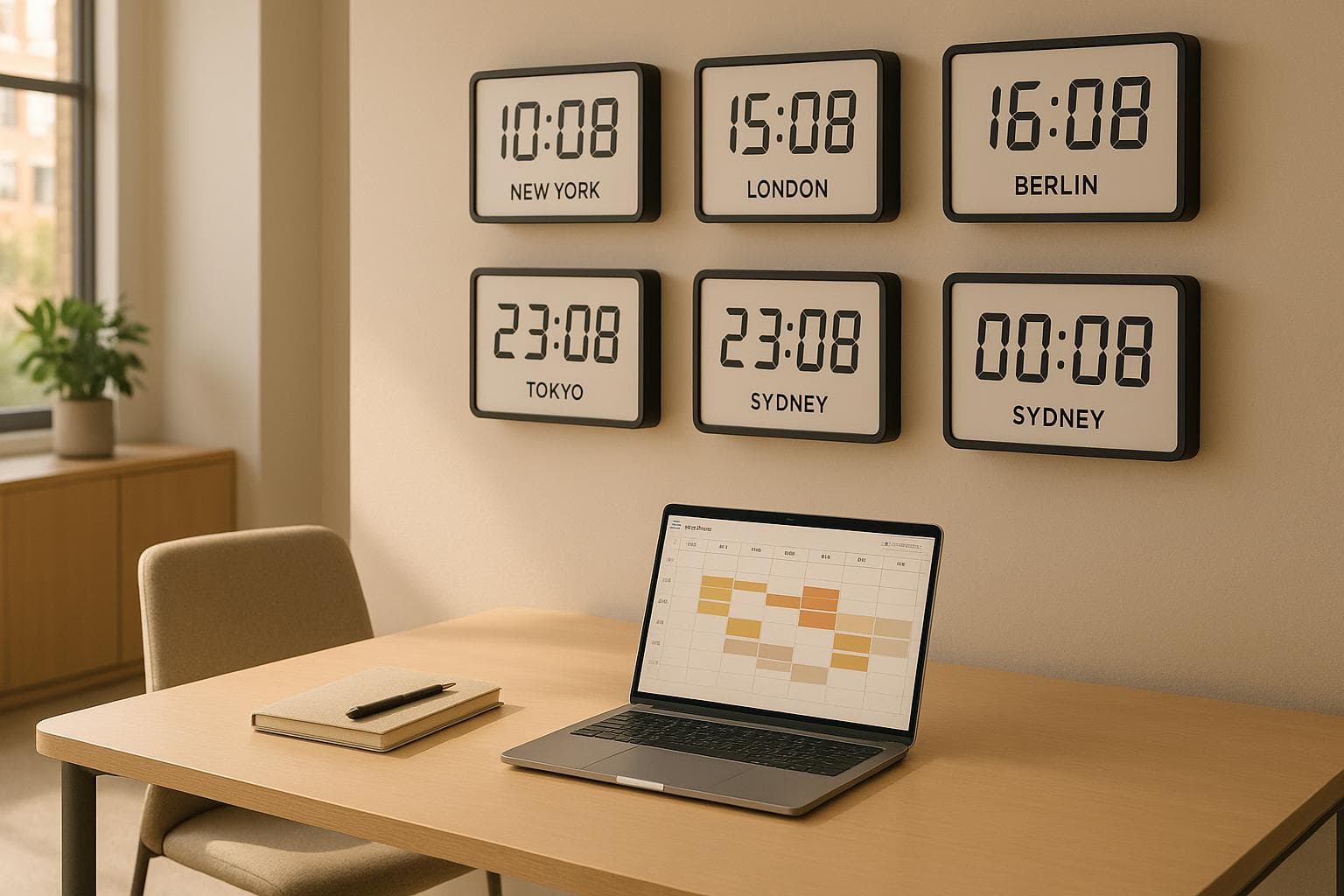
Asynchronous Work for Social Media Teams
Social media teams can achieve better results by using asynchronous workflows. This approach allows team members to work on their own schedules without being tied to real-time collaboration. By reducing interruptions and unnecessary meetings, teams can focus more on producing high-quality content and managing campaigns effectively.
Key Takeaways:
- Improves focus: Tasks like writing, designing, or video editing benefit from uninterrupted time.
- Reduces meetings: Replace live calls with updates via tools, saving hours weekly.
- Supports global teams: Enables seamless collaboration across time zones.
- Simplifies workflows: Tools like Posterly help schedule and manage content efficiently.
By adopting these practices, social media teams in the UAE and beyond can work smarter, stay aligned, and maintain a healthier balance between work and personal life.
Why Social Media Teams Benefit from Asynchronous Work
How Social Media Work Functions
Social media teams thrive on asynchronous workflows because most tasks are tied to planned timelines rather than requiring immediate collaboration. Think about it: content creation, scheduling, analytics, and community management all follow structured calendars and predictable cycles. There’s rarely a need to drop everything for real-time coordination.
Take creative production, for example. Writing captions, designing visuals, or editing videos requires uninterrupted focus. These tasks are best tackled during deep work sessions, where team members can group similar activities - like scripting Instagram Reels or designing carousel posts - without the constant ping of notifications. Analytics and reporting, too, are typically done on a fixed schedule - daily, weekly, or monthly - and can be handled independently using dashboards.
Community management, on the other hand, can be divided into shifts across a 24-hour cycle. For UAE-based teams, this means aligning with local peak engagement times, such as evenings and weekends, while still accommodating global time zones for international brands.
Tools like Posterly’s unified scheduler make it even easier to plan content in advance. Teams can upload posts once, customise them for multiple platforms, and schedule everything in minutes - cutting down on repetitive, manual work.
Despite these advantages, real-time workflows often disrupt this structure and create unnecessary challenges.
Problems with Real-Time Work in Social Media Teams
Real-time workflows can feel like a never-ending stream of interruptions, especially for creative tasks. Constant disruptions create delays that pile up over the course of a busy day, making it harder to complete high-quality work.
Then there’s the issue of live meetings and an always-on chat culture. These can lead to stress, burnout, and a sense of being "always available." Team members may feel pressured to respond instantly, even outside of regular work hours. For distributed teams, synchronising across time zones - such as GST and US Pacific Time - can result in late-night or early-morning calls. This is especially tough in the UAE, where maintaining a work-life balance and honouring religious commitments is highly prioritised.
Real-time workflows can also create bottlenecks. For example, content might sit in limbo waiting for a stakeholder's approval or feedback. Verbal decisions made during live discussions often go undocumented, causing confusion when teams grow or roles shift. Managing multiple social platforms separately only adds to the chaos, with missed posting windows leading to lower engagement and slower growth.
With these challenges in mind, asynchronous workflows offer a much-needed solution.
How Async Work Solves These Problems
Asynchronous workflows allow social media teams to focus deeply on creative tasks while capturing feedback in clear, documented threads. Without the pressure for instant replies, creators can take their time reviewing briefs, brainstorming ideas, and refining drafts. This leads to more thoughtful and polished work, rather than rushed outputs.
In the UAE, teams can structure their deep-focus sessions around local routines, such as early mornings or after Isha prayers, while still collaborating effectively with global counterparts. Recorded video updates, annotated designs, and async comments make it easy to stay aligned without the need for constant live interactions.
Async-first teams also replace many status meetings with updates shared through project management tools or collaborative documents. This approach slashes the time spent in live calls. Comprehensive documentation - like campaign briefs, content calendars, and post-mortems - ensures everyone has access to the information they need, whenever they need it. For UAE-based teams balancing local clients and global headquarters, this means fewer late-night calls and more flexible schedules for everyone.
How to Make Asynchronous Work Part of Your Your Company Culture
::: @iframe https://www.youtube.com/embed/o94XBLWwFx4 :::
Main Benefits of Asynchronous Work for Social Media Teams
::: @figure 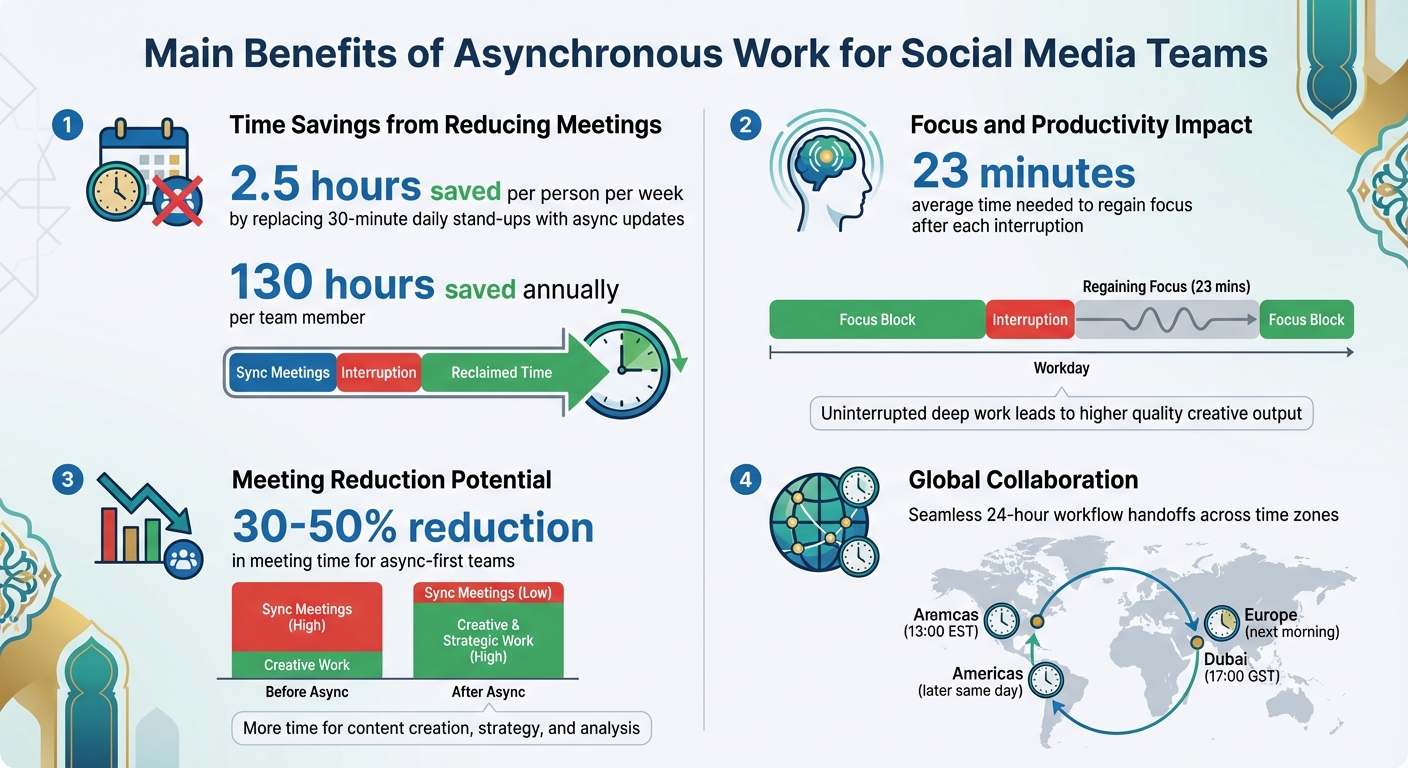 {Benefits of Asynchronous Work for Social Media Teams: Time Savings and Productivity Gains}
:::
{Benefits of Asynchronous Work for Social Media Teams: Time Savings and Productivity Gains}
:::
Boosts Creative Focus and Deep Work
Asynchronous workflows provide social media teams with the uninterrupted time they need to dive into creative tasks. Research highlights how costly interruptions can be[1], so cutting back on constant notifications and impromptu meetings directly enhances both the speed and quality of creative output.
When team members have focused blocks of time, they can produce better results on tasks like brainstorming content ideas, scripting Instagram Reels, editing videos, and analysing performance metrics. For teams in the UAE, this might mean scheduling these deep work sessions during quieter hours - early mornings before the day heats up or evenings after Isha prayers - while still staying in sync with global colleagues. This method leads to more refined, original content and quicker campaign rollouts, all while reducing the need for excessive meetings.
Reduces Meetings and Maximises Time
Replacing daily synchronous meetings with written or video updates can save a significant amount of time. For instance, swapping a 30-minute daily stand-up with an asynchronous update saves 2.5 hours per person per week - adding up to approximately 130 hours annually. This reclaimed time can be channelled into creating content, engaging with communities, analysing performance data, or exploring new platforms and formats.
For UAE-based agencies managing multiple clients, these time savings mean delivering higher-quality campaigns, responding to trends faster, and dedicating more resources to strategic initiatives. The approach also aligns well with local business hours and cultural practices. Teams adopting asynchronous workflows report less fatigue from virtual meetings[2], which helps preserve mental energy for solving creative challenges. Additionally, this setup naturally supports coordination across global teams.
Facilitates Global Collaboration
Asynchronous work eliminates the need for overlapping schedules, making it easier to build and manage global social media teams. A strategist in Dubai can record a brief at 17:00 GST, which a copywriter in Europe reviews the next morning, followed by a designer in the Americas who works on visuals later in the day. This seamless handoff process leads to faster campaign execution and improved turnaround times.
It also addresses typical issues like delayed feedback, missed meetings due to time zone clashes, and the pressure to always be available. For UAE teams working with colleagues across Europe, Asia, and the Americas, asynchronous workflows reduce scheduling conflicts while respecting local customs, such as weekend days, prayer times, and family commitments. This setup allows everyone to contribute during their local working hours, making collaboration smoother and more efficient[1][3].
sbb-itb-f7b3a33
How to Implement Asynchronous Workflows
Planning and Scheduling Content
To make asynchronous workflows effective, start by centralising your content calendar on a unified dashboard. This ensures every team member can access, update, and adjust plans independently. Tools like Posterly offer various views - calendar, list, and table - to schedule posts across platforms such as Instagram, TikTok, LinkedIn, and YouTube. Upload your content once, let AI tailor it for each platform, and schedule a week’s worth of posts in just minutes. This setup allows team members across different time zones to contribute without needing to work simultaneously.
Assign clear ownership for each piece of content, complete with deadlines for drafts and approvals. This structure enables everyone to work during their most productive hours, whether that’s early morning or late evening. A well-organised schedule also helps maintain momentum by keeping feedback and approval processes streamlined.
Managing Creative Feedback and Approvals
Once your content calendar is in place, establish a structured process for creative feedback to avoid unnecessary delays. Use shared documents to create detailed creative briefs. These should include essential details like brand guidelines, target audience insights, campaign goals, and visual references. Such preparation ensures that feedback can happen asynchronously without the need for live meetings.
Set specific timelines for each stage of the process: 24 hours for reviewing briefs, 48 hours for first drafts, 24 hours for feedback, and another 24 hours for final approval. When deadlines are clear, team members know exactly when to check for updates, eliminating the need for constant back-and-forth communication. Collaborative platforms make this even smoother by allowing stakeholders to leave actionable comments directly on drafts, ensuring clarity and version control.
AI tools like Posterly's Caption Assist and Nano Banana can further simplify the process by generating high-quality captions and visuals right from the start. This reduces the need for multiple revision cycles, speeding up approvals and keeping the workflow efficient.
Tracking Performance and Conducting Reviews
Asynchronous workflows don’t stop at scheduling; they also rely heavily on performance tracking. Use analytics dashboards to gather metrics like engagement rates, reach, and conversions from all social platforms in one place. Team members can review these metrics during their working hours and add insights to shared reports without needing to coordinate in real time.
Set up weekly or fortnightly review cycles where team members can contribute updates - either written or in video format - to a central discussion thread. This ensures everyone can access and comment on performance data at their convenience, fostering accountability while respecting individual schedules.
Posterly’s real-time queue monitoring and status tracking features add another layer of efficiency. Teams can quickly see which posts have been published, which are pending, and whether any issues need addressing - all from a single dashboard. This level of visibility allows for proactive problem-solving without the need for urgent calls or meetings, keeping workflows smooth regardless of time zones or work preferences.
Tools for Asynchronous Social Media Collaboration
AI-Powered Scheduling and Content Creation
A well-organised scheduling platform is the backbone of any asynchronous social media workflow. It allows team members to plan, draft, and schedule content at their own pace.
Posterly simplifies managing over 10 social platforms - like Instagram, TikTok, LinkedIn, and YouTube - through a single dashboard. Teams can upload content once, and with the help of AI, adapt it to suit each platform. Features such as Caption Assist generate tailored captions and hashtags, while Nano Banana offers tools for image creation and editing. The Hey Posterly AI feature even allows posts to be scheduled using natural language commands, automatically handling the finer details. For tech-savvy teams, the GitHub integration turns code commits into polished marketing content, making it easier to share updates. Plus, Posterly offers competitive pricing plans.
Batch scheduling lets teams prepare an entire week’s content in one focused session, while real-time queue monitoring and automatic retries ensure posts go live as planned - no need to be online at specific times. These tools also work seamlessly with project management and documentation platforms, making asynchronous collaboration smoother than ever.
Project and Task Management Tools
Scheduling tools handle the "when", but project management platforms like Asana and Trello take care of the "how." These tools track tasks transparently, giving every team member visibility into project statuses, deadlines, and assignments - all without endless meetings.
Clear task ownership and documented feedback ensure that everyone knows their responsibilities and can review updates on their own time. Progress tracking is accessible to all, so teammates in different time zones can stay informed without having to chase updates or interrupt others' workflows.
Documentation and Communication Platforms
Beyond scheduling and task tracking, efficient documentation and communication are essential. They create a centralised knowledge base and communication flow, helping teams avoid unnecessary delays caused by waiting for responses.
Platforms like Notion, Confluence, and Google Workspace act as central hubs for everything from brand guidelines and content calendars to approval workflows and performance metrics. By making this information available at any time, these tools help teams work independently while accommodating local time zones and preferences. For communication, tools like Slack and Microsoft Teams (when used asynchronously) encourage thoughtful discussions and provide searchable archives. Video messaging platforms like Loom allow team members to record visual feedback, preserving context that may be lost in written comments.
To make this system work, establish clear norms for communication channels, set expectations for response times (e.g., within 24 hours), and outline escalation procedures for urgent matters. When documentation is thorough and accessible, teams can significantly reduce the need for live meetings, maintaining productivity across time zones while respecting individual schedules.
Conclusion
Asynchronous workflows transform the workplace by replacing constant interruptions and endless meetings with focused, intentional productivity. By adopting async-first practices, teams across the UAE and the broader MENA region can cut meeting time by 30–50%, freeing up valuable hours each week for tasks like content creation, strategic planning, and in-depth analysis. With every interruption taking an average of 23 minutes to regain focus [1], reducing unnecessary pings and calls directly contributes to sustained creativity and efficiency. This approach not only boosts productivity but also lays the groundwork for smoother global collaboration and a better work-life balance.
For distributed teams, async collaboration eliminates the need for overlapping work hours. A designer in Abu Dhabi, for instance, can review feedback at 10:00 AM GST, while a strategist in London picks up the conversation the following morning. This flexibility is particularly beneficial during Ramadan, Eid, or National Day campaigns, where respecting personal time and cultural observances becomes especially important.
Beyond improving productivity, asynchronous work addresses the challenges of constant interruptions and rigid schedules. It promotes a healthier work environment by reducing burnout and ending the "always-on" culture. Teams gain more control over their time, fostering trust instead of micromanagement. Additionally, thorough documentation ensures a searchable knowledge base that supports better decision-making. When paired with AI-powered tools like Posterly, which centralises and automates scheduling, async workflows become even more efficient - enabling social media teams to plan an entire week’s content in just minutes.
This shift to asynchronous work isn’t just about getting more done - it’s about building a healthier, more inclusive, and creative workplace where social media professionals can thrive, no matter where they are or what time zone they work in.
FAQs
::: faq
How does asynchronous work help social media teams stay focused?
Asynchronous work allows social media teams to stay focused by giving team members the flexibility to work independently and on their own schedules. This reduces interruptions from constant real-time communication, creating space for more focused efforts on tasks like content creation, planning, and strategy.
Without the constant pressure to reply instantly to messages or updates, team members can better manage their time and deliver higher-quality results. This approach works particularly well for remote teams juggling a variety of projects across different platforms. :::
::: faq
What challenges do social media teams face with real-time workflows?
Real-time workflows on social media can feel like a juggling act. Teams need to keep an eye on queues constantly, ensure failed tasks are retried automatically, and avoid posting the same content more than once. On top of that, every platform comes with its own set of rules and quirks, making the process even trickier to manage.
However, with the right tools and well-thought-out strategies, these challenges become far more manageable. Streamlining these processes helps reduce mistakes and keeps posting schedules on track, even when dealing with multiple platforms at once. :::
::: faq
What are the best practices for implementing asynchronous workflows in social media teams?
To make asynchronous workflows work smoothly, begin by leveraging tools that bring together content planning, scheduling, and tracking in one place. Platforms like Posterly, powered by AI, can make this easier with features like smart scheduling and automated content creation. These tools help teams collaborate effectively, even when spread across various time zones.
Set clear communication rules, establish achievable deadlines, and automate routine tasks. This approach not only boosts efficiency but also helps avoid delays, especially when navigating different schedules and cultural considerations in the UAE. :::
Related Articles
How to Create 30 Days of Social Media Content Using AI Images in posterly
A practical guide to generating a full month of original social media images with posterly's AI image tool, writing captions for each one, and scheduling everything in a single session.
Read moreHow to Find the Best Time to Post on Social Media Using posterly's AI Scheduler
Stop guessing when to post. This guide explains how posterly's AI Scheduler analyses your audience activity and automatically picks the best posting times so your content gets seen by more people.
Read moreHow to Manage Google Business Reviews on Autopilot With posterly
A step-by-step guide to responding to Google reviews with AI, automatically requesting new reviews from customers, auditing your profile for local SEO, and turning your best reviews into social media content.
Read moreHow to Manage Multiple Client Social Media Accounts With posterly Workspaces
A practical guide for agencies and teams on using posterly Workspaces to organise client accounts, assign roles, get content approved, and schedule posts across dozens of social profiles without things getting messy.
Read more